The Ultimate Acoustic Foam Placement Guide for Podcasters and Gamers

Acoustic Foam Placement Guide for Podcasters and Gamers

Acoustic Foam Placement Guide for Podcasters and Gamers

Are you a podcaster, streamer, or serious gamer? You know the frustration. Your expensive microphone picks up everything. It picks up the echo of your voice, your PC hum, and room noise. Buying Acoustic Foam Panels is only the first step. Smart placement is the real secret to clear vocals and immersive audio.

This guide gives you a clear plan. Set up your Acoustic Foam Panels to cut echo. This will reduce room noise. You will get professional, studio-quality sound that keeps listeners engaged.

The First Rule: Absorption, Not Soundproofing

Know the mission before you fit your first panel. Acoustic Foam Panels are for sound absorption. They stop reflections (echo/reverb) in your room. This improves the sound quality inside. They are not soundproofing. They will not stop a neighbor’s dog or traffic noise. You are stopping the reflections that make your voice sound hollow or muddy.

Why Placement is More Important than Quantity

Placing panels randomly in a small room is wasteful. You do not have to cover every square inch. Focus your panels on key spots. This stops the first and worst reflections from hitting your microphone. This targeted method gives you the biggest audio quality increase for your money.

Finding the Sweet Spot: The First Reflection Points

The most important part of a foam setup is treating the first reflection points. This is where sound from your mouth hits a wall or ceiling. It then bounces directly into your microphone.

1. Marking Side Wall Reflection Points

These reflections ruin clarity and stereo imaging. They make your voice sound “smeared.”

The Mirror Trick:

  • Sit in your usual spot.

  • Ask a friend to hold a small flat mirror against the wall next to your microphone.

  • Have your friend slide the mirror along the wall.

  • Stop when you can see the microphone (or your mouth) in the mirror.

  • That is your first reflection point. Mark it.

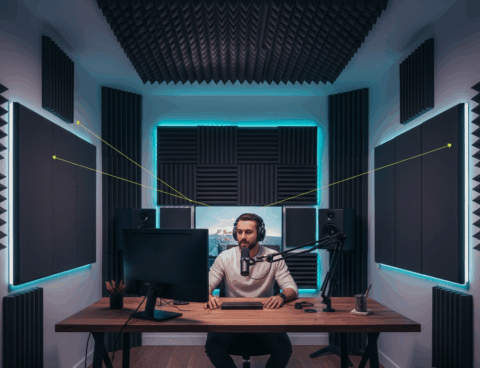
The Solution: Install one large Acoustic Foam Panel on the left and right walls. Place it at that marked point. If you use speaker monitors, repeat this for the reflection points of both speakers.

2. The Ceiling Reflection Point

The ceiling is often overlooked. It is a damaging reflection surface. This is very true in low-ceiling rooms.

Locating the Spot: The spot is usually over your head. It might be slightly in front of your head. Sit in your chair. Have your friend hold the mirror on the ceiling. They move it until you see the microphone.

The Solution: Install a ceiling cloud. This is a panel or set of panels. Suspend it 2-4 inches below the ceiling over this point. Suspending the panels creates an air gap. This air gap improves their absorption. It works well on lower-mid frequencies.

Advanced Placement: Behind the Microphone and Monitors

You have tamed the first reflections. Now, focus on areas that add noise to your microphone.

3. The Wall Behind the Microphone

This is very important for podcasters and vocalists. Sound does not just move forward. It also moves backward. It hits the wall behind the mic. It then reflects into the back of the mic.

Placement Strategy: Cover a large area of the wall behind you. Install panels in at least a 3-foot by 3-foot area. Center this area behind your head. This setup cuts down the direct rear reflection. It gives you a tighter, purer vocal sound.

4. Monitor Area Treatment (For Gamers and Producers)

Gamers often have large monitors. The rigid screen is a large reflector. It bounces sound at your walls.

Placement Strategy: Put two smaller panels behind the monitor. Put them on the wall spaces to each side of the monitor. This absorbs sound reflecting off the screen. It stops new, complex reflections. This targeted method is key to a good foam setup for streaming.

Dealing with Bass and Corner Issues

Acoustic Foam Panels are not made to stop low-frequency buildup. You can still reduce some buildup in small, square rooms.

5. Corner Bass Traps (The Thickness Factor)

Low-frequency sound waves build up in the corners of your room. Thin foam cannot solve this.

The Solution: You need specific Bass Traps. These are very thick pieces of foam (often 8 inches thick). Or, use packed foam that fits in the corners. These are called dihedral corners. Install these in the corners closest to your microphone and speakers. This placement helps control low-end sound in a small room.

Final Checklist for Your Acoustic Foam Panels Placement

Your goal is to get maximum sound clarity. You do this by stopping the first sound reflections. Use this final checklist:

  • Sides: Use the mirror trick. Treat the reflection points on each side of your mic or listening position.

  • Ceiling: Have a suspended panel (cloud) hung over your head.

  • Rear Wall: Cover the wall behind your head or mic with a large panel. This controls rear reflection.

  • Corners: Place special Bass Traps (thick foam) in the front two corners. This tightens up any boominess.

This clear guide for installing Acoustic Foam Panels helps you. Your investment will give your audience a high-quality sound experience.
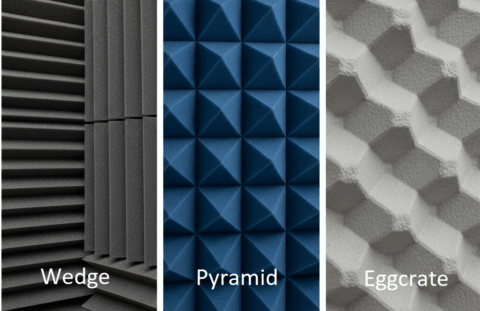
Wedge vs. Pyramid vs. Eggcrate: Which Acoustic Foam Panel Shape is Best for Your Frequencies?

Wedge vs. Pyramid vs. Eggcrate: Which Acoustic Foam Panel Shape is Best for Your Frequencies?

Wedge vs. Pyramid vs. Eggcrate: Which Acoustic Foam Panel Shape is Best for Your Frequencies?

Furnishing a studio, booth, or streaming room involves many choices. The shapes of Acoustic Foam Panels can seem confusing. The choice is not just about looks. The foam’s geometric surface has a technical job. It controls how the foam handles sound waves. You must know the differences between wedge, pyramid, and eggcrate foam. This knowledge helps you get the best sound quality for the lowest cost.

The Science Behind Acoustic Foam Panels

First, let’s define the role of Acoustic Foam Panels. They are made for absorption. They target mid- and high-frequency sound waves. These waves cause flutter echo and reverb. The panels have an open-cell structure. Sound energy passes into this material. Friction transforms the sound energy into tiny amounts of heat.

Why Surface Area Matters

The contours (wedges, pyramids, or ridges) maximize the panel’s surface area. This surface area faces the incoming sound waves. A flat foam panel is effective. A contoured panel of the same material and thickness is more efficient. The contours offer more material for sound waves to hit and enter. The foam’s shape affects how sound waves break up before they enter the material.

The Contours Defined: Breaking Down the Shapes

All shapes increase surface area. Their different geometries affect how they respond to sound waves. The angles and frequencies of the sound matter.

Wedge Acoustic Foam Panels

The wedge shape is the most common. It has sharp, angular teeth. These teeth run parallel to each other on the panel surface.

Technical Profile:

  • Geometry: Parallel ridges with steep peaks.

  • Acoustic Effect: The wedge design breaks up sound waves at a predictable angle. This provides very effective absorption. It works well for high-end frequencies where clarity is needed.

  • Best For: Critical listening areas, mixing rooms, and recording studios. People choose wedge panels for their predictable performance. They create a “deader,” more authentic acoustic space for mixing or mastering audio.

  • Aesthetics: Has a clean, directional, and professional look.

Pyramid Acoustic Foam Panels

Pyramid foam has symmetrical, four-sided pyramids. These are spread uniformly over the panel surface.

Technical Profile:

  • Geometry: Individual, square-shaped, pyramidal hills.

  • Acoustic Effect: The pyramid shape scatters sound uniformly before absorption. Sound waves hit the pyramid faces at many angles, no matter the source’s position. This controls off-angle reflections better than parallel wedges. They offer good broadband absorption in the middle and high-frequency range (500 Hz to 4000 Hz).

  • Best For: Live rooms, voiceover booths, and content creation setups. Pyramid panels are a good general-F. They work well where the sound source moves. They also work well where many fast reflections need control.

  • Aesthetics: Provides a uniform, multi-dimensional, and softer look than wedges.

Eggcrate (Convoluted) Acoustic Foam Panels

The eggcrate design costs the least of the three. It has soft, rounded peaks and valleys. It looks like the cardboard trays used for eggs.

Technical Profile:

  • Geometry: Soft, curved, wavy lines.

  • Acoustic Effect: This shape increases surface area. The gentle contours are the least effective at scattering sound waves before absorption. Their main job is to add absorptive material. They are not very effective below the very high-frequency range (mostly above 2000 Hz).

  • Best For: Low-budget projects. They are good for simple echo suppression in closets or small corners. They also line equipment cases. Eggcrate panels reduce high-end “chatter” or slap echo. They are for uses where acoustic accuracy is not the goal.

  • Aesthetics: Minimal, simple, and the least visually bold.

The Critical Factor: Panel Thickness

The shape affects how sound hits the foam. The panel’s thickness is the most important factor. Thickness defines which frequencies are absorbed. No amount of contouring can fix a lack of foam depth.

Why Thickness Determines Low-End Performance

Lower frequencies have longer wavelengths. A foam panel must be at least one-quarter (1/4) of the wavelength to absorb it.

A common problem frequency in small rooms is 250 Hz. The wavelength of 250 Hz is about 4.5 feet (1.4 meters). To absorb this frequency, the foam must be thicker than 13 inches (33 cm).

Thin (1-inch) Acoustic Foam Panels only absorb high frequencies. This is true for wedge or pyramid shapes. These thin panels stop reverb and echo. You need 3-inch to 4-inch thick foam to control mid-range frequencies (like 500 Hz).

Panel Thickness Typical Target Frequency Range Best Application
1-inch (2.5 cm) Mostly 2000 Hz and higher (Highs) Minor echo reduction, lining small objects.
2-inch (5 cm) 1000 Hz and higher (Highs and Upper Mids) Treating first reflection points in small rooms.
3-inch to 4-inch (7.5 cm to 10 cm) 500 Hz and over (Broadband) Critical mixing, vocals, and general room treatment.

Finding the Right Choice for Your Space

Ultimately, the best choice among Acoustic Foam Panels depends on your specific goals and budget:

  1. For Critical Listening (Mixing/Mastering): Select Wedge Foam with a thickness of 3 inches or 4 inches and position it at strategic reflection points to ensure maximum directional sound clarity.

  2. For General Use (Gaming/Podcasting/Voiceover): Select Pyramid Foam in 2-inch or 3-inch thickness. Its even scatter properties are good in controlling sound in less predictable environments.

  3. For Budget Control or Utility: Use Eggcrate Foam in a 2-inch thickness to manage high-frequency flutter echo without a significant investment.

By prioritizing thickness for low-end control and using the surface contour to fine-tune the mid-to-high frequency performance, you will make a wise choice that moves you closer to the professional, clear sound you are after.

The Durability of Fabric Panels: A Deep Dive into Core Materials and Fabric Quality

The Durability of Fabric Panels

The Durability of Fabric Panels

People investing in acoustic treatment ask one question: How long will Fabric Panels last? The answer is not simple. Longevity depends on the core materials, the exterior finish, and safety ratings. Understanding these parts helps you choose Acoustic fabric panels. Good panels keep their look and sound-reduction qualities for many years.

Durability and Acoustic Performance

A durable acoustic panel looks good. It also performs its job consistently over time. Low-quality Fabric Panels may sag, warp, or crumble. This change affects the air gaps and density needed for sound absorption. Durability means consistent sound performance.

Core Material Comparison

The core material is the heart of the panel. It does most of the sound absorption. Fiberglass and mineral wool are the most common high-performance materials.

Fiberglass Core

Fiberglass is often a high-density, semi-rigid insulation board. It is made of fine glass fibers spun into a mat. This creates many tiny air pockets. These pockets trap and scatter sound energy.

  • Longevity: Fiberglass is very stable. It resists sagging or settling over time. It keeps its thickness and acoustic performance.

  • Density: It is available in different densities. Higher density provides better low-frequency absorption.

  • Moisture Resistance: The panel resists moisture damage. It must be sealed and installed correctly to stop water entry.

Mineral Wool (Rock Wool) Core

Mineral wool, or rock wool, comes from molten rock and slag spun into thin fibers. It offers performance similar to fiberglass.

  • Longevity: Like fiberglass, it resists compression or slumping. The panel keeps its shape and thickness for absorption.

  • Thermal and Fire Resistance: Mineral wool is naturally non-combustible. This makes it a favored choice where fire resistance is a top priority.

  • Sustainability: It can be made with a high percentage of recycled content (slag). This appeals to green building projects.

The Problem with Foam Cores

Cheap acoustic foam is common. It has poor durability and acoustic problems. Foam can decay, yellow, and lose its shape. Its absorption qualities at lower frequencies are poorer than fiberglass or mineral wool.

The Fabric Quality

The fabric covering protects the panel. It guards against daily wear, UV exposure, and physical damage. A high-quality, durable fabric keeps the panel looking good and working well.

Tightly Woven and High-Abrasion Fabrics

The best fabrics are made for high-traffic areas, like commercial offices or theaters.

  • Abrasion Rating: Look for fabrics with a high Wyzenbeek rating. This measures resistance to wear. Commercial-grade fabrics often exceed 30,000 double rubs. They can withstand light contact, dusting, and washing without pilling or tearing.

  • Tension and Sagging: A tight weave and proper tautness stop the fabric from stretching or bulging. These are common flaws in cheap panels.

  • UV Resistance: Fabrics near windows must be highly UV-resistant. This prevents fading. Fading spoils the look of an installation.

Acoustic Filtering by Fabric

The core absorbs sound. The fabric must be acoustically transparent. The cloth should be “breathable.” It must be dense enough to be strong. It must also be porous enough to let high-frequency sound pass through to the core. Good acoustic textiles are designed for this mix of durability and acoustic transparency.

Safety and Fire Resistance

In commercial, public, and high-class residential areas, fire resistance is a requirement. It also shows the durability and quality of the Fabric Panels.

ASTM E-84 Class A Rating

Good acoustic panel makers certify their products with an ASTM E-84 Class A rating. This standard tests the surface burning properties of building materials.

  • Flame Spread Index: This measures the rate a flame spreads. Class A requires a score of 0–25.

  • Smoke Developed Index: This measures the quantity of smoke produced. Class A requires a score of 0–450.

Using materials like fire-resistant mineral wool helps meet this standard. Applying fire-retardant chemicals to the fabric also helps. This rating is a mark of a durable, commercial-grade product.

Panel Edges and Framing

The edges are the weakest part of any acoustic panel.

Hardened Edge Treatments

Good Fabric Panels have resin-hardened edges or an internal wooden frame. This structure stops the corners and sides from being crushed or frayed. This damage can happen during installation, shipping, or cleaning. A sharp, durable edge maintains a professional look. It also helps in wrapping the fabric tightly.

The Ultimate Guide to Acoustic Panel Placement: Where to Put Them for Maximum Effect

Acoustic Fabric Panels

Acoustic Fabric Panels

Does poor sound in your room frustrate you? Echoes and muddy acoustics are common problems. High-quality Acoustic Fabric Panels can help. Their placement is the most important part of sound treatment. This guide explains the theory you need. It covers the Noise Reduction Coefficient (NRC). It also explains how to find the first reflection points. These steps change an echo-filled room into a clear listening space.

Understanding Sound Treatment Principles

You must understand sound control before hanging panels. Sound waves are predictable. They reflect, absorb, or diffuse. We want to increase absorption for sound clarity.

The Noise Reduction Coefficient (NRC)

The Noise Reduction Coefficient (NRC) is a key rating for fabric panels.

  • What it is: The NRC is a single-number rating. It reports the average sound absorption of a material. It averages absorption coefficients at four frequencies: 250 Hz, 500 Hz, 1000 Hz, and 2000 Hz.

  • What it means: An NRC of 0 means the material absorbs no sound. Polished concrete is an example. An NRC of 1.0 means the material absorbs 100 percent of the sound. Good Acoustic Fabric Panels have an NRC of 0.8 to 1.0.

Choosing a high-NRC panel gives you effective materials for placement.

Target First Reflection Points

Treating the first reflection points is the best action you can take to improve sound clarity. It also helps stereo imaging.

What Is a First Reflection Point?

Sound leaves your speakers and travels to your ears. This is “direct sound.” Sound also hits the walls, ceiling, and floor. It bounces off these surfaces to your ears. This is “reflected sound.”

A first reflection point is the exact spot on a surface where sound first hits. It then reflects straight to the listener. These reflections arrive milliseconds after the direct sound. They blur the audio. They smear the stereo image.

The Mirror Trick

You can find these points easily. You need a mirror and a friend.

  1. Sit in your main listening spot.

  2. Have your friend put a small, flat mirror on the wall between you and the speaker.

  3. Your friend moves the mirror along the wall.

  4. Stop when you see the reflection of the speaker in the mirror.

That spot is your first reflection point. Repeat this for the left wall, right wall, and ceiling. Place your most effective Acoustic Fabric Panels in these spots.

Panel Density at Reflection Points

These points are very important. Use your best, high-NRC panels here. Panels should be 2 inches (5 cm) thick or more. Thicker panels provide good broadband absorption at these spots.

Controlling Low Frequencies: Bass Traps

Thinner fabric panels control mid- and high-frequency reflections. Low-frequency sound waves (bass) are longer. They are harder to control. Untreated bass sounds “boomy” or “muddy.” This problem is worse in small rooms with standing waves.

Placement: The Corners

Bass accumulates most strongly in room corners. These are spots where two or three surfaces meet.

  • Dihedral Corners: The four vertical wall-to-wall corners.

  • Trihedral Corners: The top and bottom corners where walls meet the ceiling or floor.

A bass trap is an extra-dense Acoustic Fabric Panel. It is often 4 to 8 inches thick. It is made to absorb these long, strong bass waves.

Recommendation: Install bass traps in all four vertical corners. Run them from the floor to the ceiling if you can. If you have a budget limit, treat the two corners behind your speakers first. Most low-frequency energy gathers there.

Finishing the Treatment: Rear Wall and Diffusion

Next, treat the wall behind your listening position. You have two main choices for the back wall. The choice depends on your room size.

  • Absorption (Small Rooms): Small rooms (less than 12 feet long) get slap echo. This comes from sound reflecting off the back wall. Place Acoustic Fabric Panels on the center of the rear wall to absorb this energy.

  • Diffusion (Medium to Large Rooms): Use diffusers in larger rooms. A diffuser panel does not absorb sound. It scatters sound in many directions. This keeps a “live” feeling in the room. It also removes harsh reflections.

Ceiling and Floor

Ceiling: You must treat the ceiling reflection point. For the rest of the ceiling, use ceiling clouds. These are panels mounted a few inches below the ceiling. The air gap helps them absorb more mid-to-low frequencies.

Floor: A heavy rug or carpet treats the floor reflection point. This is a low-cost, effective sound absorbent.

Quick Reference: Optimal Acoustic Panel Placement

Treatment Area Problem Solved Placement Strategy Ideal Product
First Reflection Points (Side Walls/Ceiling) Fights with sonic smearing and destroys stereo imaging. Where you see the speaker’s reflection in a mirror (from the listening position). High-NRC Acoustic Fabric Panels (2″ to 4″ thick).
Room Corners (Wall-Wall/Wall-Wall-Ceiling) Manages standing waves and excessive “boomy” bass energy. Spanning the vertical and horizontal sides of the room. Dedicated Bass Traps (4″-8″ thick, corner-fitted).
Rear Wall (Behind Listener) Minimizes delayed reflection and echo. Central section of the wall (Absorption or Diffusion). Absorbers for small rooms; Diffusers for large rooms.

By following this technical, step-by-step guide, you can maximize the effectiveness of your Acoustic Fabric Panels and achieve the sound quality you desire.

Stretch Fabric System: The Seamless Fusion of Acoustics and Design

Acoustic Stretch Fabric Stretch Fabric System

Stretch Fabric Systems
In the world of modern interior design and architecture, a fundamental conflict often arises: the battle between aesthetics and acoustics. We desire spaces that are visually stunning—open, minimalist, and full of clean lines and hard surfaces. Yet, these very designs often create harsh acoustic environments filled with distracting echoes and reverberation. For years, the solution involved compromise: installing bulky, unsightly acoustic panels that treated the sound but disrupted the design.

But what if you didn’t have to compromise? What if you could achieve flawless acoustics with a solution that was not only invisible but actually enhanced your design?

Enter the stretch fabric system. This sophisticated and versatile technology represents the pinnacle of integrated acoustic design. It’s a solution that offers superior sound control while providing a luxurious, seamless finish that can be customized to any interior. This guide will explore everything you need to know about stretched fabric acoustic wall systems and why they are transforming spaces across the globe.

What Exactly Is a Stretch Fabric System?

Unlike a standard pre-made acoustic panel that is simply hung on a wall, a stretch fabric system is a complete, site-installed solution. It is custom-built on-site to perfectly fit the specific dimensions of a wall or ceiling, creating a flawless, monolithic appearance.

The system consists of three core components that work in harmony:

  1. The Perimeter Track: A patented polymer tracking system is installed around the outer edge of the area to be treated. This track acts as a hidden frame, featuring a specialized “jaw” that will grip the fabric.
  2. The Acoustic Core: Inside the perimeter created by the track, a sound-absorbing core material is fitted. This is the heart of the system’s acoustic performance. The core is typically made from high-density fiberglass, mineral wool, or recycled PET felt, and its thickness and density can be specified to target specific acoustic goals.
  3. The Fabric Finish: A single, large piece of acoustically transparent fabric is stretched taut across the core and tucked securely into the track. This final layer is the only visible part of the system, providing a beautiful and seamless finish.

The result is a soft, sound-absorbing wall that looks like a perfectly upholstered surface. When sound waves in the room hit the stretch fabric wall, they pass through the breathable fabric and are trapped and dissipated by the acoustic core, preventing them from bouncing back into the room as echo.

The Unparalleled Advantages of a Stretch Fabric Wall System

The popularity of stretch fabric wall systems stems from their unique combination of aesthetic freedom, high performance, and incredible versatility.

1. Flawless Aesthetics and Complete Design Freedom

This is the most visually striking benefit. Because the system is built to the exact specifications of the surface, it can cover an entire wall from edge to edge, floor to ceiling, without a single seam.

  • Hide Imperfections: It can be installed over uneven or damaged walls, concealing imperfections and providing a perfect finish.
  • Integrate Technology: Outlets, light switches, speakers, and thermostats can be mounted flush within the system, making them appear to float on the fabric surface.
  • Endless Choices: With thousands of acoustically transparent fabrics available in countless colours, textures, and patterns, the design possibilities are limitless. You can even use custom-printed acoustic stretch fabric to create a stunning feature wall with logos, photography, or artwork.

2. Superior and Tunable Acoustic Performance

A stretched fabric acoustic wall system is not a one-size-fits-all solution. Its performance can be precisely engineered to meet the needs of the space. By varying the type, thickness (from 25mm to 100mm or more), and density of the acoustic core, acousticians can target specific sound frequencies, control reverberation time (RT60), and achieve optimal speech clarity. This makes it a far more powerful and precise tool than standard off-the-shelf panels.

3. Unmatched Versatility

The flexible tracking system allows it to be installed on virtually any surface.

  • Complex Shapes: It can easily follow curves, wrap around columns, fit into alcoves, and navigate complex architectural features.
  • Walls and Ceilings: The system is equally effective as a stretch wall fabric system or when applied to ceilings to create “acoustic lids” that control sound in large, open spaces.

Applications: Where Do Stretch Fabric Systems Shine?

The combination of high-end aesthetics and powerful acoustics makes stretch fabric systems the ideal choice for a wide range of demanding environments.

  • Corporate Boardrooms & Conference Rooms: Ensuring crystal-clear audio for important meetings and video calls.
  • High-End Home Theaters: Creating a truly immersive cinematic experience by eliminating flutter echo and sound reflections.
  • Recording Studios & Auditoriums: Providing the critically accurate listening environments required by professionals.
  • Hospitality & Fine Dining: Reducing the noisy clatter in restaurants and hotel lobbies to create a more relaxed and luxurious atmosphere for guests.
  • Educational Institutions: Enhancing speech intelligibility in lecture halls and libraries.

In rapidly developing regions with a focus on landmark architecture, such as Saudi Arabia, these systems are becoming the gold standard. The demand for high-performance acoustic wall panels in KSA is met perfectly by the seamless and premium finish of a stretch fabric installation, aligning with the vision for world-class corporate and public spaces.

Stretch Fabric Systems vs. Stretched Fabric Wall Panels

It’s important to clarify the difference between a full system and pre-made panels.

  • Stretched Fabric Wall Panels: These are pre-fabricated panels of a standard size, consisting of an acoustic core wrapped in fabric. They are then hung on the wall like a picture frame. While effective for smaller, targeted areas, they result in visible seams and offer less design integration.
  • Stretch Fabric Systems: These are fully integrated, custom-built solutions that offer a seamless, high-end finish. They are the superior choice for covering large or complex areas and achieving a truly professional and integrated look.

While stretched fabric wall panels can be a good solution for some applications, a full stretch fabric wall system operates on a different level of quality, performance, and aesthetic integration.

Conclusion: The Ultimate Investment in Your Space

A stretch fabric system is more than just an acoustic treatment; it’s an architectural finish. It is an investment in a space that not only sounds incredible but also looks and feels exceptional. By eliminating the need to choose between beautiful design and clear sound, these systems offer the best of both worlds.

For architects, designers, and property owners who refuse to compromise, the seamless beauty and powerful performance of a stretched fabric acoustic wall system is the definitive answer. It is the sound of perfect design.

MLV Barriers: The Secret to True Soundproofing

Mass Loaded Vinyl | MLV Barriers

MLV Barriers: The Secret to True Soundproofing
In our increasingly noisy world, finding a pocket of peace and quiet can feel like a luxury. Whether it’s the rumble of city traffic, the chatter from the next office, or the sound of your neighbour’s television, unwanted noise is a constant intrusion. When faced with this problem, many people turn to solutions like foam or thick curtains, only to be disappointed. The reason? They’re trying to absorb sound when they really need to
block it.

To truly stop sound in its tracks, you need a material designed for the job. Enter Mass Loaded Vinyl, the powerhouse material behind professional soundproofing. Often referred to as an acoustic vinyl barrier or simply MLV barriers, this unassuming product is the secret weapon used by acousticians and builders to create genuinely quiet spaces.

This guide will demystify MLV, explaining what it is, how it works, and how it can be used to build an effective acoustic barrier in any environment.

What Exactly is Mass Loaded Vinyl (MLV)?

Mass Loaded Vinyl is a high-density, flexible material engineered specifically for soundproofing. It’s a type of vinyl acoustic barrier that is made by impregnating a vinyl base with heavy, inert particles like barium sulfate or calcium carbonate. This process gives the material two critical properties for blocking sound:

  1. Mass: MLV is incredibly heavy for its thickness. A standard 1/8-inch (3mm) thick sheet can weigh over 1 pound per square foot (approx. 5 kg/m²). In the world of acoustics, mass is king. The heavier and denser a barrier is, the more difficult it is for sound vibrations to pass through it.
  2. Limpness (Flexibility): This is what makes MLV truly special. Unlike rigid materials like drywall or wood, which can vibrate and transmit sound energy (like a drum skin), MLV is limp and flexible. When sound waves hit it, the material’s flexibility helps to damp the vibrational energy, converting it into a tiny, imperceptible amount of heat. It acts as a dead stop for sound.

Think of it this way: a rigid acoustic wall might block some sound, but it can still carry the vibration through. An MLV barrier stops the vibration itself, providing a much higher level of sound isolation.

How Do MLV Barriers Actually Block Sound?

To understand how MLV works, you need to understand how sound travels through a wall. Sound is a vibration. When someone talks in the next room, the sound waves hit the wall, causing it to vibrate. This vibration travels through the wall studs and is then recreated as sound on your side.

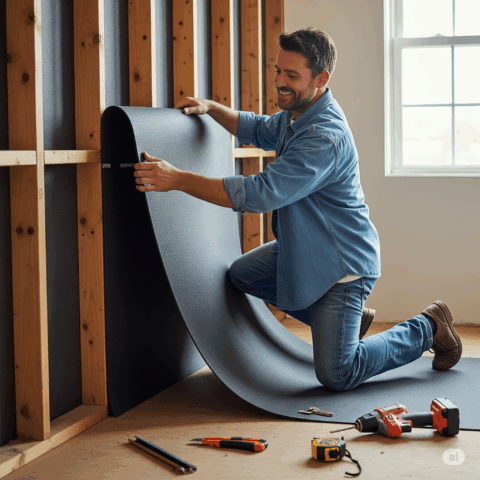
An mlv barrier disrupts this process. Typically installed directly on the studs before the drywall goes up, it creates a decoupled, high-mass layer.

  • When sound hits the first layer of drywall, it starts to vibrate.
  • This vibration then meets the heavy, limp MLV barrier.
  • The MLV’s sheer mass reflects a significant amount of the sound energy right back.
  • Its limpness prevents the remaining vibrational energy from effectively passing through to the studs and the second layer of drywall.

The result is a dramatic reduction in sound transmission. The effectiveness of a material at blocking sound is measured by its Sound Transmission Class (STC) rating. A standard interior wall might have an STC of 33. Adding a layer of MLV can easily boost that wall’s performance to an STC of 50+, a level where loud speech is completely inaudible.

Key Applications: Where to Use an Acoustic Vinyl Barrier

The versatility of MLV makes it an ideal solution for a vast range of soundproofing projects, from residential to large-scale industrial systems.

Residential Soundproofing

  • Home Theaters: To contain the powerful sound of movies and create an immersive experience without disturbing the rest of the house.
  • Bedrooms & Nurseries: To block noise from traffic, neighbours, or other family members for a peaceful night’s sleep.
  • Floors/Ceilings: To reduce the sound of footsteps and impact noise from the floor above.
  • Home Studios: Essential for isolating recording spaces to capture clean audio and prevent sound from leaking out.

Commercial and Office Spaces

MLV is a perfect material for creating effective sound barriers for office environments where confidentiality and concentration are key.

  • Private Offices & Conference Rooms: To ensure conversations remain private and prevent outside chatter from becoming a distraction.
  • Healthcare Facilities: For patient rooms and consultation areas where privacy (HIPAA compliance) is critical.
  • Hotels: To provide guests with a quiet, isolated experience, free from noise from adjacent rooms or hallways.

Industrial and Mechanical Noise

  • Machinery Enclosures: Wrapping loud generators, pumps, or HVAC units in MLV can significantly reduce the noise they produce.
  • Ducts and Pipes: MLV can be used to wrap noisy ductwork and pipes to stop the noise from traveling throughout a building.
  • Noise Barrier Systems in UAE & Beyond: MLV is a core component in large-scale outdoor noise barrier systems, such as those used around construction sites, highways, or industrial plants in rapidly developing regions.

MLV vs. “Soundproof Panels” and “Acoustic Wall Panels”

There is a lot of confusion around acoustic terminology. It’s important to distinguish MLV from other products.

  • Acoustic Wall Panels: This term usually refers to fabric-wrapped panels designed for sound absorption (reducing echo within a room). They are not effective at blocking sound. While an acoustic panel for walls can improve a room’s sound quality, it won’t stop your neighbour’s music.
  • Soundproof Panels: This can be a misleading marketing term. Some soundproof panels are simply high-density absorptive panels. Others are composite panels that may contain a layer of MLV bonded to other materials like drywall.

The key takeaway is that MLV is the raw, high-performance material that serves as the engine of a soundproof system. It’s the ingredient you add to an acoustic wall assembly to give it true sound-blocking power.

Conclusion: Your Most Powerful Tool for Quiet

When it comes to serious soundproofing, Mass Loaded Vinyl is an unparalleled solution. Its unique combination of high mass and limp flexibility allows it to block sound far more effectively than other materials of a similar thickness.

Whether you’re building a state-of-the-art recording studio, creating confidential office spaces, or simply seeking refuge from a noisy world in your own home, an acoustic vinyl barrier is your most reliable and effective tool. By understanding how to properly use MLV barriers, you can move beyond simple sound absorption and build a truly soundproof environment.

Acoustic Consultants in Saudi Arabia : Best is Akinco (Akcoustic)

The Science of Silence: How Soundproof Specialists Create Tranquil Spaces | Acoustic Consultants in Saudi Arabia

Acoustic Consultants in Saudi Arabia : Best is Akinco
Saudi Arabia is in the midst of a breathtaking transformation. From the futuristic vision of NEOM to the bustling preparations for Riyadh Expo 2030, the Kingdom is a global hub of architectural innovation and ambitious development. As gleaming skyscrapers, luxury hotels, world-class entertainment venues, and smart cities rise from the desert, a critical, yet often overlooked, element will define their success:
sound.

In the race to build bigger and faster, the quality of a space’s acoustic environment can be forgotten. Yet, poor acoustics can undermine the very purpose of a building, leading to unproductive offices, unpleasant dining experiences, and a lack of privacy. This is where the expertise of an acoustic specialist becomes not just a luxury, but an absolute necessity. For any major project in the Kingdom, engaging professional noise consultants in KSA is a crucial step towards achieving true excellence.

The Unseen Challenge: Noise in Modern KSA Architecture

Modern design trends favour open-plan layouts, minimalist aesthetics, and hard surfaces like glass, marble, and polished concrete. While visually striking, these materials are highly reflective of sound. Without proper acoustic treatment, this can create a cacophony of noise.

Consider these common scenarios in Saudi Arabia:

  • The Bustling Corporate Office: In a large, open-plan office in Riyadh’s financial district, the constant chatter, phone calls, and keyboard clicks merge into a distracting hum, reducing productivity and increasing employee stress.
  • The Luxury Jeddah Restaurant: Diners at a high-end restaurant find themselves shouting to be heard over the clatter of cutlery and the conversations from other tables, ruining the intimate ambiance.
  • The High-End Residential Tower: Residents in a new apartment building can clearly hear their neighbours through the walls, leading to complaints and a diminished sense of privacy and comfort.

In every case, the root cause is a failure to manage sound. This is a complex challenge that requires more than just adding a few soft furnishings; it requires scientific analysis and expert engineering.

What Does an Acoustic Consultant Actually Do?

An acoustic consultant is a highly trained sound proof expert who blends the principles of physics, engineering, and design to control noise and shape the sound of a space. They are the architects of silence and the maestros of clarity. Their role goes far beyond simply recommending products.

A true acoustic specialist provides a comprehensive service that includes:

  1. Acoustic Analysis and Modelling: Using advanced software and sound-level meters, they measure and predict how sound will behave in a specific environment.
  2. Architectural Acoustic Design: They work alongside architects and designers from the initial planning stages to integrate acoustic principles into the building’s core design, advising on room shape, layout, and construction materials.
  3. Soundproofing and Isolation: They design strategies to block unwanted noise from entering or leaving a space. This is crucial for cinemas, recording studios, boardrooms, and residential buildings.
  4. Interior Acoustic Treatment: They create plans to absorb excess sound within a room, reducing echo and reverberation to improve speech clarity and overall comfort.

Akinco KSA: The Premier Acoustic Consultants in Saudi Arabia

When searching for acoustic consultants Saudi Arabia, one name consistently rises to the top for its expertise, comprehensive solutions, and deep understanding of the local market: Akinco KSA.

Akinco KSA is the best consultant in KSA because they provide a holistic, end-to-end solution. They don’t just identify the problem; they design, supply, and install the complete solution. Their team of engineers and designers understands the unique challenges and opportunities presented by projects within the Kingdom. From the grand scale of a new airport to the fine details of a private home theatre, Akinco KSA has established itself as the go-to sound proof expert.

Finding the Best Acoustic Panel Solutions in Saudi Arabia

A key tool in the consultant’s arsenal is the acoustic panel. However, not all panels are created equal. As the demand for solutions like acoustic panels in Riyadh and other major cities grows, it’s vital to choose the right type for the job.

Akinco KSA offers a vast range of the best acoustic panel solutions in Saudi Arabia, ensuring that performance is never compromised for aesthetics. These solutions include:

  • Fabric-Wrapped Acoustic Panels: Highly versatile and effective, these panels can be customized with a wide variety of colours and textures to seamlessly blend into any interior design.
  • Wooden Acoustic Panels: Offering a sophisticated and natural aesthetic, perforated or grooved wood panels provide excellent sound absorption while adding a touch of elegance.
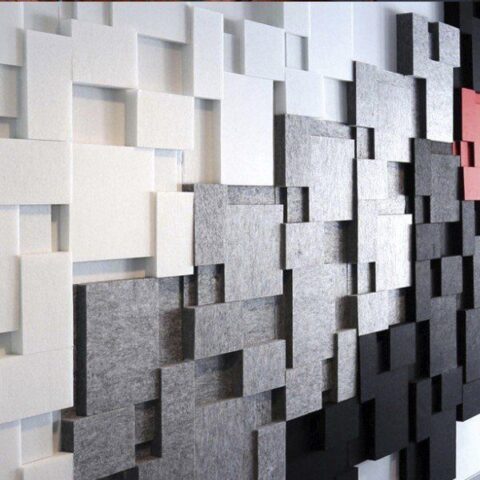
  • PET Felt Acoustic Panels: Made from recycled materials, these panels are a sustainable and durable option, available in various shapes, sizes, and colours to create stunning visual features.
  • Custom-Printed Panels: Any high-resolution image or corporate branding can be printed onto acoustically transparent fabric, turning a functional necessity into a work of art.

The experts at Akinco KSA help clients navigate these options to select the perfect system that meets both the acoustic requirements and the design vision of the project.

Your Project Deserves an Acoustic Specialist

In the competitive landscape of Saudi Arabia’s development boom, the quality of the end-user experience is what will set a project apart. A visually stunning building that is acoustically uncomfortable is a failed investment.

Engaging a professional acoustic consultant like Akinco KSA from the outset is one of the smartest decisions a project manager or developer can make. It saves money on costly retrofits, enhances the building’s value and reputation, and ensures the space functions exactly as intended.

Don’t let noise undermine your vision. Build a future for Saudi Arabia that not only looks incredible but sounds exceptional too.

Ready to transform the acoustic environment of your space? Contact the expert team at Akinco KSA today for a comprehensive consultation.


The Ultimate Guide to Sound Insulation Panels: Acoustic Foam vs. Soundproofing

Soundproof Wall Panels | sound absorbing panels | Sound Insulation panels

Is noise invading your peace and quiet? Whether it’s the traffic outside your bedroom, your neighbour’s TV, or the distracting echo in your home office, unwanted sound is a common problem. When you search for a solution, you’re bombarded with terms: sound insulation panels, acoustic foam panels, soundproof foam, sound deadening panels. It’s a confusing landscape.

What’s the difference? Do you need to absorb sound or block it? Are acoustic foam panels the same as sound proof foam?

This guide is here to clear up the confusion. We will break down the different types of panels, explain the science behind how they work, and help you choose the perfect solution to reclaim your quiet.

The Most Important Concept: Soundproofing vs. Sound Absorption

Before diving into specific products, you must understand this fundamental difference. Most people use the terms interchangeably, but in the world of acoustics, they mean two completely different things.

Sound Absorption (Acoustic Treatment)

Goal: To improve the sound quality inside a room.

How it works: Sound absorption uses soft, porous materials to soak up sound waves, primarily to reduce echo and reverberation. Think of it like placing sponges around a room to mop up spilled water. The sponges don’t stop water from getting in; they just control the mess inside.

Sound Insulation (Soundproofing)

Goal: To stop sound from traveling from one space to another.

How it works: Sound insulation uses heavy, dense, massive materials to create a barrier that blocks sound waves from passing through. This is like building a dam to stop water from entering an area. The goal is isolation.

Keywords: Sound insulation panels, sound deadening panels.

Understanding this distinction is the key. Buying acoustic foam to block your neighbour’s noise will lead to disappointment, just as lining a recording studio with dense rubber will do little to control echo.

A Deep Dive into Sound Absorbing Panels

If your problem is echo, poor speech clarity, or harsh sound reflections within a room, then you need sound absorption. These products are often called acoustic panels.

What Are They Made Of?

Sound absorbing panels are made from open-cell, porous materials. The most common types are:

  • Acoustic Foam Panels: This is what most people picture when they think of sound treatment. Typically made from polyurethane, an acoustic foam panel comes in various shapes like pyramids, wedges, and flats. The sculpted shapes increase the surface area, making them more effective at trapping sound waves, especially in the mid-to-high frequency range (like human speech and cymbals).
  • Fabric-Wrapped Panels: Considered a step-up in both performance and aesthetics, these panels consist of a dense core of mineral wool or fiberglass, wrapped in an acoustically transparent fabric. They are highly effective absorbers across a broader range of frequencies than standard foam and look much more professional.
  • Polyester (PET) Panels: Made from recycled plastics, these are rigid, durable panels that offer excellent sound absorption and come in many colours. They can be used as sound tiles or full wall coverings.

How Do They Work?

When a sound wave hits a soft acoustic foam panel or a fiberglass panel, it doesn’t bounce off. Instead, it enters the material’s open-cell structure. As the sound energy navigates through the complex pathways of the material, friction converts it into a minuscule amount of heat, effectively “deadening” the sound and stopping the reflection.

When Should You Use Them?

  • Home Recording Studios: To get clean, professional-sounding recordings without echo.
  • Home Theaters: To improve movie dialogue clarity and create an immersive sound experience.
  • Offices & Conference Rooms: To reduce chatter and make conversations easier to understand.
  • Restaurants & Cafes: To lower the overall noise level for a more pleasant dining atmosphere.
  • Living Rooms with High Ceilings: To tame the “cathedral effect” and make the space feel more intimate.

Exploring True Sound Insulation Panels

If your problem is noise from the outside world getting in, or noise from your room getting out, you need sound insulation. This requires mass and density.

What Are They Made Of?

Sound insulation panels are heavy and are designed to be a barrier. They are not the same as lightweight sound foam panels. Key materials include:

  • Mass Loaded Vinyl (MLV): This is the gold standard for soundproofing. MLV is a thin but incredibly heavy and flexible sheet of vinyl loaded with metal particles. It’s typically installed inside walls, ceilings, or floors during construction to add significant mass without taking up much space. It is a true sound deadening material.
  • Acoustic Gypsum Board (Soundproof Drywall): This looks like standard drywall but is much heavier. It’s constructed with multiple layers of gypsum sandwiching a layer of sound-damping compound, which converts sound energy into heat.
  • Composite Panels: These are engineered sound insulation panels that combine layers of different materials, such as a layer of MLV bonded to a layer of closed-cell foam. The foam acts as a decoupler to separate the mass from the structure, further improving its ability to block sound.

How Do They Work?

Sound travels as a vibration. To stop it, you need a barrier so heavy and dense that the sound energy can’t vibrate it. When sound waves hit a heavy material like MLV or acoustic drywall, most of the energy is reflected away. Very little energy is able to pass through to the other side.

When Should You Use Them?

  • Apartment Walls: To block the sound of your neighbours’ voices, music, or footsteps.
  • Roadside Homes: To reduce traffic noise from entering a bedroom or living room.
  • Drum Rooms or Band Practice Spaces: To keep loud music contained and not disturb the rest of the house.
  • Mechanical Rooms: To isolate the noise from loud machinery like HVAC units or generators.

The Big Myth: “Soundproof Foam”

Let’s address the most searched and most misunderstood term: soundproof foam. In 99% of cases, the product being marketed as sound proof foam is actually acoustic foam—the light, porous kind meant for sound absorption.

Lightweight, open-cell foam cannot block sound effectively. It lacks the essential ingredient for soundproofing: mass.

While some very dense, closed-cell foams have minor sound insulation properties, they are nowhere near as effective as dedicated materials like Mass Loaded Vinyl. If your goal is to block sound, do not buy the typical pyramid or wedge foam panels. You need mass, not just texture.

Conclusion: Choosing the Right Panel for Your Noise Problem

Now that you understand the difference, choosing the right solution is simple. Ask yourself one question:

“Am I trying to fix the sound inside my room, or am I trying to block sound from entering or leaving my room?”

  • If your answer is “inside the room” (echo, poor clarity), you need SOUND ABSORBING PANELS like acoustic foam panels, fabric-wrapped panels, or acoustic tiles.
  • If your answer is “entering or leaving the room” (neighbours, traffic), you need SOUND INSULATION PANELS and materials like Mass Loaded Vinyl and acoustic drywall.

By identifying your specific problem, you can confidently select the right product and finally achieve the peace and quiet you’ve been looking for.


Clearing the Air: Polyester, PET, and Felt Acoustic Panels Explained

Polyester Acoustic Panels | Polyester Acoustic Panels in Riyadh | Pet Felt Panels

Navigating the world of acoustic panels can be confusing. You’re looking to quiet a space, but you’re faced with a seemingly endless list of terms: polyester acoustic panels, PET acoustic panels, felt acoustic panels, and PET felt panels. Are they all the same? Do they offer different benefits? The short answer is yes, they are closely related, but understanding the subtle distinctions is key to making an informed choice. This guide will clarify the terms and help you find the perfect solution for your space.

The Acoustic Panel Family Tree 🌲

Think of these terms as a family tree, where each name provides a bit more detail about the panel’s identity.

  • Polyester Acoustic Panels are the main family. This is the broad, overarching term for any sound-absorbing panel made from polyester fibers. These fibers are compressed and heat-bonded into a rigid, porous board that effectively traps sound waves.
  • PET Acoustic Panels are a specific type of polyester panel. PET stands for Polyethylene Terephthalate, which is the scientific name for a common form of polyester. What makes PET panels special is that they are primarily made from recycled PET plastic—the kind found in plastic bottles. This makes them an environmentally friendly and sustainable choice. A product labeled as a PET acoustic panel is a member of the polyester family with a clear focus on its eco-friendly origin.
  • Felt Acoustic Panels describe the aesthetic and texture of the panel. These panels have a soft, non-woven, fabric-like surface that resembles traditional felt. While felt can be made from various materials (like wool), in the acoustic industry, the term almost always refers to panels made from a synthetic felt, which is typically polyester or PET. The name “felt” emphasizes the finished look and feel of the product rather than its core material.
  • PET Felt Panels are a combination of the above. This term explicitly states that the panel has a felt-like finish and is made from recycled PET plastic. It is a highly specific and descriptive name that highlights both the texture and the sustainable material.

In short, a PET acoustic panel is a polyester acoustic panel, and a felt acoustic panel is very likely also a polyester or PET panel. The different names are used to highlight different selling points, such as sustainability (PET) or appearance (felt).

Pros and Cons: A Quick Breakdown ✅❌

While the names may differ, these panels share many of the same advantages and a few key considerations.

Pros

  • Exceptional Acoustic Performance: These panels are highly effective at absorbing mid-to-high-frequency sounds, which are most common in offices, restaurants, and homes. They reduce echo and reverberation, making spaces feel clearer and quieter.
  • Durability and Longevity: They are rigid, robust, and resistant to moisture, making them ideal for a wide range of environments, including those with varying humidity levels common in the GCC region. They will not warp, rot, or degrade over time.
  • Design Flexibility: Available in a vast array of colors, shapes, and sizes, these panels can be customized to complement any interior design. They can be cut into intricate patterns or used as a bold architectural feature.
  • Eco-Friendly (PET): For companies and individuals committed to sustainability, PET acoustic panels offer a compelling choice, repurposing plastic waste into a functional, long-lasting product.

Cons

  • Fire Ratings: While most reputable products meet fire safety standards, it is crucial to ensure that the panels you choose have the necessary fire safety certifications for your specific application.
  • Limited Low-Frequency Absorption: Like most porous absorbers, these panels are less effective at blocking or absorbing very low-frequency sounds (bass). For serious low-frequency issues, they must be combined with other solutions like bass traps.
  • Professional Installation is Key: The effectiveness of any acoustic panel hinges on proper installation. Misalignment or improper mounting can compromise performance and leave gaps for sound to pass through.

Why Akinco is Your Only Choice

With so many options on the market, why should you choose Akinco for your acoustic panel needs? We believe a great product is only half the solution; the other half is expert guidance and professional service.

  • Expertise That Eliminates Confusion: Our certified acoustic engineers don’t just sell you a product; they provide a full consultation to understand your specific noise problem. We will guide you through the process, helping you select the perfect felt acoustic panels or PET panels that are right for your project’s acoustic, aesthetic, and sustainability goals. We cut through the industry jargon and give you a clear recommendation.
  • Certified Quality and Durability: Akinco’s products are manufactured to the highest standards, ensuring exceptional acoustic performance and a long lifespan. Our panels come with the necessary fire safety certifications, giving you peace of mind that you are installing a product that is not only effective but also safe for your space.
  • A Full-Service Solution: We are more than just a supplier. Akinco is a professional acoustic barrier installer and a full-service provider. From the initial site assessment and acoustic modeling to the final, meticulous installation, we handle every step of the process. This ensures your acoustic panel installation is executed flawlessly, guaranteeing the performance you expect.
  • A Local Partner in the GCC: With a strong presence in Saudi Arabia and the broader GCC region, we understand the local market, building regulations, and design sensibilities. We are your trusted partner in creating quieter, more productive, and more beautiful spaces.

Don’t let the terms confuse you. Partner with Akinco and let our expertise guide you to the perfect acoustic solution. Contact us today for a consultation and take the first step towards a quieter, more comfortable environment.


Why You Need a Professional Acoustic Barrier Installation

Mass Loaded Vinyl | Acoustic Vinyl Barrier | Acoustic Barrier Installation

The Kingdom of Saudi Arabia is a vibrant nation in the midst of an unprecedented transformation. Across its vast landscape, the rhythmic sound of progress echoes—from the bustling streets of Riyadh and the coastal energy of Jeddah to the industrial hubs of Jubail and Yanbu. This rapid urbanization, however, brings with it a significant challenge: noise pollution. The constant hum of traffic, the clang of construction, and the whir of industrial machinery can disrupt our daily lives, compromising our health, productivity, and overall well-being.

While the problem of noise is pervasive, the solution is not a simple one-size-fits-all product. It requires a strategic approach, a deep understanding of sound, and the expertise of a professional acoustic barrier installer. The journey to a quieter kingdom begins with recognizing that a simple purchase is insufficient; true sound control is achieved through meticulous planning and a professional acoustic barrier installation.

The Unseen Threat: How Noise Pollution Impacts Our Lives

Before we can appreciate the solution, we must first understand the problem in depth. Noise pollution is more than just an annoyance; it is a serious environmental and health concern. The World Health Organization (WHO) has identified it as a leading public health risk in urban areas. Chronic exposure to high levels of noise can lead to a host of physiological and psychological issues:

  • Physiological Effects: Prolonged noise exposure triggers the body’s stress response, releasing cortisol and adrenaline. This can lead to increased heart rate, elevated blood pressure, and a higher risk of cardiovascular disease. The disruption of sleep is one of the most damaging effects, as it impairs the body’s ability to repair and restore itself, leading to fatigue and reduced immunity.
  • Psychological Impacts: Constant noise can be a source of significant stress, leading to irritability, anxiety, and a decrease in cognitive performance. In a professional environment, it can severely hinder concentration, creativity, and communication among employees.
  • Quality of Life: On a broader scale, noise pollution diminishes our quality of life. It makes it difficult to relax in our homes, enjoy outdoor spaces, or have a peaceful conversation, eroding the sense of tranquility we all seek.

Addressing this issue requires a comprehensive strategy, and at its core is the professional use of a Noise Acoustic Barrier to contain, block, and manage sound at its source.

The Science of Silence: Understanding Acoustic Barriers

An acoustic barrier is not just a thick panel. It is a scientifically engineered system designed to block the transmission of sound waves. To effectively quiet an environment, you must understand the fundamental principles of soundproofing.

  • Mass and Density: The most effective way to block sound is by adding mass to a structure. Heavier, denser materials are more difficult for sound waves to vibrate through. This is the core principle behind products like Mass Loaded Vinyl Barrier (MLV). MLV is a highly dense, flexible material that adds significant mass to a wall or ceiling without taking up a large amount of space. Its density allows it to stop a wide range of frequencies, including the low-frequency rumbles from machinery and traffic that are particularly challenging to block.
  • The Power of Decoupling: Another critical strategy is decoupling, which involves creating an air gap between two surfaces. This prevents vibrations from passing directly from one surface to another. A professional acoustic barrier installer can design a decoupled wall system that uses resilient channels or sound clips to physically separate the layers, dramatically improving the soundproofing performance.
  • Acoustic Barriers vs. Acoustic Absorption: It is crucial to distinguish between these two concepts. An acoustic barrier’s primary function is to block sound from entering or leaving a space. In contrast, acoustic absorption uses materials like foam or fabric panels to absorb sound waves within a room, reducing echo and reverberation. While both are part of a complete acoustic solution, only a barrier can effectively prevent sound transmission from an external source.

This nuanced understanding is why relying on a professional acoustic barrier installer is essential. They possess the knowledge to select the right material, whether it be a specialized vinyl acoustic barrier or a heavy-duty outdoor fence, and apply it with the precision required to achieve a quiet environment.

The Akinco Advantage: Your Partner in Professionalism

In a market saturated with products, the true value lies in the expertise of the acoustic barrier installer. Akinco, a trusted partner in Saudi Arabia, offers a full-service solution that goes far beyond simply supplying materials. Our comprehensive approach ensures that every acoustic barrier installation is not just effective, but perfectly tailored to your specific needs.

  1. Initial Assessment and Sound Analysis: The process begins with our team of certified acoustic engineers conducting a thorough on-site analysis. We measure sound levels, identify the primary noise source, and determine the most effective strategy to mitigate it. This scientific approach ensures we are treating the root cause of the noise, not just the symptoms.
  2. Customized Solutions: A professional acoustic barrier installer knows that every project is unique. For a factory in a bustling industrial city, the solution might involve a heavy-duty vinyl acoustic barrier enclosure, while a home near a busy highway might require a combination of MLV in the walls and acoustic seals on the windows. We design solutions that are specific to your environment, budget, and desired outcome.
  3. Flawless Installation: Even the most advanced Mass Loaded Vinyl Barrier will fail if installed incorrectly. Sound will always find the path of least resistance, seeking out small gaps and cracks. Our installation team is trained to meticulously seal all penetrations around pipes, electrical outlets, and ventilation systems. This attention to detail is what separates a professional installation from a DIY attempt and guarantees the long-term effectiveness of the barrier.
  4. Compliance and Safety: Our professional acoustic barrier installation methods adhere to local building codes and safety regulations. This is particularly critical for industrial and commercial projects where compliance is not just a recommendation but a legal requirement.

Real-World Applications in Saudi Arabia

Across the Kingdom, our professional acoustic barrier installation services are making a tangible difference:

  • Construction Sites: With massive projects like the Riyadh Metro, construction noise can be a major source of disruption. We provide temporary Noise Acoustic Barrier solutions to shield surrounding neighborhoods, allowing for continued progress without impacting the community.
  • Industrial Zones: In manufacturing plants and industrial cities like Jubail, our barriers are used to create quieter working environments, protecting employees from hearing damage and increasing productivity.
  • Urban Residential Areas: For residents in high-density neighborhoods, our vinyl acoustic barrier solutions are transforming noisy apartments and villas into peaceful sanctuaries.
  • Hospitality and Commercial Spaces: Our expertise ensures hotels, restaurants, and offices provide a serene atmosphere for their guests and employees, enhancing their brand reputation and customer satisfaction.

In a kingdom built on vision and ambition, a professional acoustic barrier installer is a partner in progress. They are the guardians of a peaceful environment, ensuring that the sound of progress is not a source of stress, but a testament to a healthier, more prosperous future. Don’t let noise compromise your quality of life. Contact us today to discover how our professional solutions can help you create your own pocket of silence in the heart of a thriving nation.