Acoustic Ceiling Baffles & Clouds: When to Use Them in Saudi Spaces

Acoustic Ceiling Baffles & Clouds

Some rooms refuse to behave acoustically. High ceilings, open plans, hard surfaces, and large volumes create an echo chamber where sound bounces repeatedly before it reaches the listener. Conversations blur. Presentations become difficult to follow. Music loses definition. The space works visually, but it fails acoustically.

Acoustic Ceiling baffles and acoustic clouds solve this problem directly. They treat the one surface that standard wall panels cannot easily reach: the ceiling plane and the air volume above occupied zones. In Riyadh’s large commercial, hospitality, and institutional spaces, they are often the only practical solution for meaningful acoustic improvement.

This guide explains how they work, when to use them, and how to specify them correctly.

What Are Acoustic Ceiling Baffles?

Acoustic baffles are panels suspended vertically from the ceiling structure, hanging down into the room’s air volume. They hang in parallel rows, typically perpendicular to the room’s longest axis, creating a series of absorptive surfaces that intercept sound waves travelling in multiple directions.

Because they present two absorptive faces (front and back), baffles are highly efficient per unit of material. A row of baffles provides nearly twice the effective absorptive area of the same panels mounted flat on a ceiling or wall.

Baffles work by absorbing sound energy as waves strike their surfaces, and by breaking up the direct path that sound would otherwise travel between parallel reflective surfaces.

What Are Acoustic Clouds?

Acoustic clouds are large, flat or shaped panels suspended horizontally from the ceiling, floating above the occupied zone of a room. Unlike baffles, they present a single absorptive face downward, but their large surface area and precise positioning allow them to intercept sound at the critical first reflection point between the floor and ceiling.

Clouds are particularly effective in spaces with high ceilings where the ceiling plane is too far from the occupied zone to be treated effectively with ceiling tiles alone. By suspending the cloud at a lower height, typically 2.5 to 3.5 metres above floor level, the acoustic designer brings the treatment into the zone where it matters most.

Clouds also function as lighting carriers and design features, integrating acoustic treatment with architectural expression.

Baffles vs Clouds: Which Is Right for Your Space?

Factor Acoustic Baffles Acoustic Clouds
Mounting orientation Vertical — hanging down Horizontal — floating flat
Absorptive faces Two (front and back) One (downward face)
Best for Warehouses, atriums, gyms Offices, restaurants, theatres
Ceiling height Works in very high ceilings Best at 3 to 6 metres above floor
Design integration Industrial or dramatic aesthetic Refined, architectural finish
Installation Suspension cables or rods Rigid or cable suspension
Lighting integration Limited Commonly integrated


When Do Saudi Spaces Need Ceiling Baffles or Clouds?

1. Large Open-Plan Offices

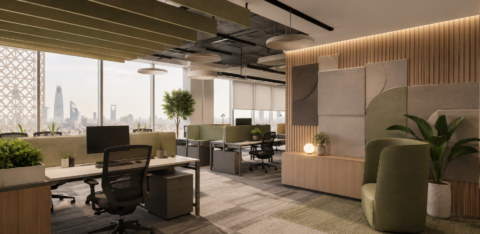
Riyadh’s modern commercial developments frequently feature open-plan floor plates with exposed concrete or metal deck ceilings. Without acoustic treatment, reverberation times in these spaces regularly exceed 1.5 seconds — well above the 0.6 to 0.8 second target for focused office work. Ceiling clouds installed above work zones reduce reverberation and improve speech intelligibility without requiring wall treatment or partitioning.

2. Hotel Lobbies and Atriums

Atrium lobbies are acoustically hostile environments. Hard stone floors, glass facades, and double- or triple-height volumes create reverberation times of two seconds or more. Vertical baffles installed in the upper volume of the atrium absorb sound energy before it accumulates to problematic levels, dramatically improving the guest experience without affecting sightlines or architectural character.

3. Restaurant and F&B Venues

Riyadh’s premium dining sector has expanded significantly. Restaurant spaces with exposed brick, concrete, or metal ceilings create reverberant environments where ambient noise reaches levels that interfere with conversation. Ceiling clouds installed above dining areas — in shapes and finishes that complement the interior design — reduce noise levels and allow guests to converse comfortably even at full occupancy.

4. Mosques and Prayer Halls

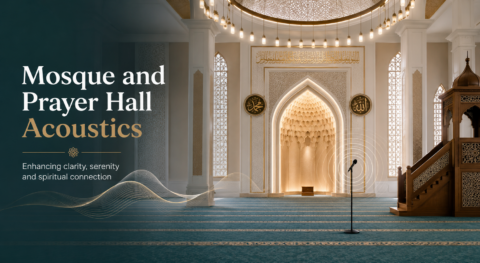
Acoustic quality in mosques directly affects the spiritual experience of worship and the intelligibility of the Khutbah. High domed ceilings and hard marble surfaces create long reverberation tails. Carefully specified baffles or clouds in neutral finishes, positioned in the upper volume of the prayer hall, reduce reverberation to an appropriate level without visible intrusion into the architectural character of the space.

5. School and University Classrooms

Educational spaces with reverberation times above 0.6 seconds significantly impair learning outcomes — particularly for younger students and non-native language learners. Classroom clouds installed above the teaching zone improve speech clarity and allow teachers to project at natural voice levels without strain.

Material Options for Saudi Climates

Fabric-Wrapped Panels

The most common baffle and cloud construction: an acoustic core — mineral wool or rigid fiberglass — wrapped in durable acoustic fabric. Available in an enormous range of fabric colours and textures. Performs well in air-conditioned environments.

Perforated Metal

Perforated aluminium or steel panels with acoustic backing suit industrial, infrastructure, and exterior-adjacent applications. Highly durable, resistant to humidity changes, and capable of carrying heavy lighting or mechanical fixtures.

Wooden Slat or Perforated Timber

Timber baffles and clouds in slatted or perforated configurations suit premium hospitality and cultural spaces where aesthetics are as important as acoustic performance. Specify engineered timber substrates — not solid wood — for Riyadh’s temperature and humidity conditions.

PET Acoustic Panels

Polyester fibre panels offer a lightweight, recyclable option with good acoustic performance. Available in a wide colour range and suitable for educational and commercial environments.

Specifying Acoustic Ceiling Solutions for Riyadh

Reverberation Time Targets

Always start with a target reverberation time (RT60) for the space. General guidance:

  • Open-plan offices: 0.6 to 0.8 seconds
  • Boardrooms and meeting rooms: 0.4 to 0.6 seconds
  • Restaurants and hospitality: 0.8 to 1.0 seconds
  • Mosques and prayer halls: 1.0 to 1.5 seconds
  • Classrooms: 0.6 seconds or below

Coverage Area

Baffles and clouds do not need to cover the entire ceiling. An acoustic designer will calculate the total absorption required and specify the appropriate coverage. Over-treating a space is as problematic as under-treating it — excessive absorption creates an unpleasant, deadened environment.

Fire and Safety Compliance

All suspended ceiling elements in Saudi commercial buildings must meet applicable fire safety standards. Specify products with documented fire ratings and confirm compliance with Saudi Building Code requirements. Suspension hardware must be rated for the panel weight with an appropriate safety factor.

Integrating Acoustics with Riyadh Interior Design

The most successful acoustic ceiling installations treat the panels as architectural elements, not afterthoughts. Baffles in bold geometric configurations, clouds in custom shapes with integrated lighting, or timber slatted elements that reference local design heritage — all of these approaches deliver acoustic performance while enhancing the visual character of the space.

Acoustic treatment works best when designers incorporate it from the start of a project, not as a retrofit after the interior design is complete.

Akinco KSA works with architects, interior designers, and acoustic consultants across Riyadh to specify and supply ceiling baffle and cloud systems that meet both the acoustic brief and the design intent, with full performance data and Saudi-compliant fire ratings.

Key Takeaways

  • Ceiling baffles hang vertically and are most efficient per unit area, best for large volumes and very high ceilings
  • Acoustic clouds float horizontally and suit offices, restaurants, and refined interior environments
  • Both solutions address reverberation in the spaces where wall panels cannot reach
  • Riyadh’s commercial growth creates significant demand for ceiling acoustic treatment in offices, hotels, restaurants, and cultural venues
  • Always specify products with fire ratings, and design acoustic treatment into the project from the start


Acoustic Underlay Guide: Best Options for Saudi Arabia’s Climate

Acoustic Underlay Guide Best Options for Saudi Arabia's Climate

Impact noise travels fast through hard floors. A chair scraping across marble, footsteps on a tiled corridor, a door slamming two floors above, these sounds move through the building structure and emerge clearly in rooms below. Acoustic underlay stops this transfer at the source.

Not all acoustic underlay products perform equally in every environment. Saudi Arabia’s climate, extreme summer heat, very low relative humidity, and significant temperature cycling between indoors and outdoors — places specific demands on underlay materials. Choose the wrong product and it degrades, compresses, or fails prematurely. Choose the right one and it performs quietly for decades.

This guide covers how acoustic underlay works, which materials suit Saudi conditions, and what to look for when you specify it.

What Acoustic Underlay Does

Acoustic underlay sits between the structural floor slab and the finished floor covering — tile, stone, timber, or carpet. Its job is to decouple the floor finish from the structure, creating a resilient layer that absorbs and dissipates impact energy before it enters the building fabric.

Two distinct sound problems require different solutions:

  • Impact noise: footsteps, dropped objects, furniture movement — transmitted through the floor structure
  • Airborne noise: speech, music, television — transmitted through walls and floors as pressure waves

Acoustic underlay addresses impact noise primarily. For airborne noise control, structural solutions — thicker slabs, floating floor systems, or acoustic wall treatments — are required in combination.

Key Performance Metrics

Metric What It Measures Good Performance
Delta Lw (dB) Weighted impact sound improvement 17 dB or above for residential
Dynamic Stiffness (MN/m3) Resilience under load Lower value = more resilient
Compressive Strength (kPa) Load-bearing capacity Must suit traffic load
Thickness (mm) Physical layer depth 3 to 10 mm typical range
Temperature Stability Performance at high temps Rated to 70 degrees C minimum


Acoustic Underlay Materials: Which Works Best in Saudi Arabia?

1. Recycled Rubber Underlay

Recycled rubber is the strongest performer for Saudi climates. It withstands high temperatures without degrading, does not compress permanently under heavy furniture or foot traffic, and maintains its acoustic properties across decades of use. Rubber underlay ranks among the best available materials for impact noise reduction.

Best for: Commercial floors, high-traffic residential areas, outdoor-adjacent spaces

2. Composite Foam and Rubber Underlay

Composite products combine a foam layer for softness with a rubber barrier for structural resilience. They deliver strong impact noise performance while adding a degree of thermal insulation, useful in Saudi buildings where ground-floor heat transfer can be significant.

Best for: Residential living areas, hotel guestrooms, multi-use commercial floors

3. Cork Underlay

Cork is a natural, sustainable material with good acoustic properties and high compressive strength. It performs well in moderate temperatures but can dry out and crack in very low-humidity environments. In Saudi Arabia, sealed cork products perform significantly better than unsealed options — the sealant prevents moisture loss and maintains flexibility.

Best for: Premium residential applications with controlled interior humidity

4. Standard Polyethylene Foam Underlay

This is the most common and least expensive underlay option. It is widely available and easy to install. However, it degrades at elevated temperatures, compresses permanently under heavy loads, and offers limited long-term acoustic performance.

Avoid in Saudi Arabia: Standard foam underlay degrades rapidly in the heat conditions present in Saudi buildings, particularly in rooms that are not continuously air-conditioned.


Climate-Specific Considerations for Saudi Arabia

Extreme Heat

Riyadh summer temperatures regularly exceed 45 degrees C outdoors. Ground-floor slabs, roof decks, and poorly insulated substrates can reach 50 to 60 degrees C. Standard foam products soften, compress, and lose their resilience at these temperatures. Always specify rubber or composite underlay products rated to a minimum of 70 degrees C continuous exposure.

Low Humidity

Relative humidity in Saudi Arabia frequently drops below 15% in the summer months. Natural materials — cork, certain foams, and some fibres — lose structural integrity when they dry out repeatedly. Specify products tested in low-humidity environments, and seal any natural underlay products before installation.

Thermal Cycling

The daily temperature swing between cooled interiors and extreme outdoor conditions creates repeated expansion and contraction in floor assemblies. Underlay products with low thermal expansion coefficients prevent joint separation and maintain consistent acoustic performance over time.

Acoustic Underlay for Different Floor Types

Floor Finish Recommended Underlay Key Consideration
Marble & Porcelain Tile Rubber or composite underlay Use uncoupling membrane to prevent cracking
Engineered Timber Cork or composite underlay Seal cork against humidity loss
Laminate Flooring Composite foam-rubber Check manufacturer underlay specification
Carpet Rubber crumb underlay High durability under repetitive compression
Raised Access Floor Specialist acoustic pads Point-load capacity is critical


Installation Best Practices

  • Clean and level the substrate before laying underlay, surface irregularities reduce acoustic performance
  • Butt underlay edges tightly; gaps allow impact sound to bridge the break
  • Tape joins with acoustic tape rated for high-temperature environments
  • Allow underlay to acclimatise to the building interior temperature before installation
  • Follow the floor finish manufacturer weight and thickness recommendations for underlay products


Specifying the Right Product

The right acoustic underlay for Saudi Arabia is one that performs acoustically, survives the climate, and suits the specific floor finish and load conditions of your project.

Generic underlay products specified without climate consideration fail early and perform inconsistently. Akinco KSA provides acoustic underlay products specified for the Saudi climate, rubber, composite, and specialist systems with confirmed temperature ratings and acoustic performance data, for residential, commercial, and hospitality applications across the Kingdom.

Summary: Best Choices for Saudi Arabia

  • Recycled rubber: Best overall performance for heat resistance and durability
  • Composite foam-rubber: Best all-round product for residential and hotel floors
  • Sealed cork: Premium natural option for controlled interior environments
  • Avoid standard PE foam: Degrades rapidly in Saudi heat and humidity conditions


Wooden Acoustic Panels for Riyadh Interiors: Aesthetics & Performance

Wooden Acoustic Panels for Riyadh

Riyadh’s interiors have evolved dramatically. Modern villas, premium offices, boutique hospitality spaces, and cultural institutions now demand a finish that is not just functional, but also considered, refined, and distinctive.

Wooden acoustic panels answer that demand. They control sound, define a space visually, and bring a material warmth that no painted wall or foam tile can replicate. This guide explains how they work, where they perform best, and what to look for when you specify them for a Riyadh interior.

Why Sound Control Matters in Riyadh Interiors

Modern Riyadh architecture favours hard surfaces: polished marble floors, glass facades, concrete ceilings, and smooth gypsum walls. These materials look exceptional, but they are acoustically unforgiving. Sound reflects off every surface, creating reverberation that makes speech unclear, music distorted, and environments tiring to occupy.

In offices, poor acoustics reduce productivity and erode concentration. In restaurants and hotels, excessive reverberation makes conversation difficult and degrades the guest experience. In meeting rooms and conference halls, echo makes communication unreliable.

Wooden acoustic panels solve this without compromising the aesthetic vision of the space.

How Wooden Acoustic Panels Work

Wooden acoustic panels use several mechanisms to control sound. The most common types include:

1. Perforated Wood Panels

These panels feature a pattern of small holes drilled through a timber face. Sound waves enter through the perforations and reach an absorptive backing material, typically mineral wool or acoustic foam, where the energy is dissipated. The result is broad-spectrum absorption with a clean, architectural face.

2. Slotted and Grooved Wood Panels

Narrow slots or grooves cut into the timber face create Helmholtz resonator cavities, tuned to absorb specific frequency ranges, particularly low and mid-range frequencies. They are highly effective in spaces with strong bass buildup.

3. Slatted Wood Panels

Timber slats mounted on an acoustic backing combine absorption with diffusion. Sound partially passes through the gaps into the absorptive layer, and the remaining energy scatters off the slat faces. This creates a balanced acoustic environment rather than aggressive deadening.

The Aesthetic Case for Timber in Riyadh

Beyond acoustics, wood brings a visual quality that is genuinely difficult to replicate. It introduces organic texture, natural variation, and material depth into spaces dominated by uniform manufactured finishes.

In Riyadh specifically, timber has cultural resonance, it connects to traditional craft and material culture while adapting easily to contemporary design languages. Properly specified, wooden acoustic panels bridge modern Saudi architecture and its cultural roots.

Common finish options include:

  • Natural oak, walnut, ash, and sapele veneers
  • Painted or lacquered MDF with acoustic backing for budget-conscious projects
  • Dark-stained timber for dramatic boardroom and lounge applications
  • Brushed or wire-brushed finishes for a textured, artisanal quality


Where to Use Wooden Acoustic Panels in Riyadh

Space Type Recommended Panel Type Key Benefit
Corporate boardrooms Perforated or grooved panels Improved speech clarity
Hotel lobbies & lounges Slatted panels with veneer Premium aesthetic + absorption
Restaurants & cafes Slatted or perforated panels Reduced reverberation
Home theatres & majlis Grooved or perforated panels Immersive sound environment
Mosques & prayer halls Slotted resonator panels Even distribution of sound
Conference & event halls Combination systems Full-spectrum control


What to Consider When Specifying Wooden Panels in Riyadh

Climate Compatibility

Riyadh’s climate is extreme, temperatures regularly exceed 45°C in summer, and the environment is exceptionally dry. Solid timber can crack and warp in these conditions. Always specify panels using engineered timber cores (MDF or HDF) with veneer faces. Engineered substrates are dimensionally stable in high heat and low humidity environments.

Fire Rating

All commercial acoustic panels installed in Saudi Arabia must comply with Saudi Building Code fire safety requirements. Specify panels with a minimum Class B1 or Class A fire rating for commercial applications. Always request certification documentation from your supplier.

Acoustic Performance Data

Ask for the panel’s Noise Reduction Coefficient (NRC) and Sound Absorption Coefficient data across frequency bands. A panel with an NRC of 0.70 or above offers meaningful absorption across the critical speech frequency range.

Installation System

Confirm the installation method: concealed clip systems look cleaner than screw-fixed panels and allow easier replacement. Ensure the wall substrate suits the panel weight, particularly on gypsum board partitions.

Wooden Panels vs Other Acoustic Solutions

Fabric panels deliver broader absorption and more colour customisation. Foam panels cost less but perform poorly and degrade quickly. Wooden acoustic panels sit in a unique position, they deliver genuine acoustic performance while functioning as a premium interior finish.

For high-end residential, hospitality, and commercial projects in Riyadh, wooden panels are often the only solution that satisfies both the acoustic engineer and the interior designer simultaneously.

Specification and Supply

Wooden acoustic panels require careful specification. The wrong panel in the wrong space, under-performing on NRC, incompatible with the climate, or inadequately fire-rated, will fail to deliver results.

Akinco KSA sources and supplies wooden acoustic panel systems designed specifically for the demands of Saudi commercial and residential interiors, with full acoustic performance data and compliance documentation available on request.

Key Takeaways

  • Wooden acoustic panels control sound while elevating interior aesthetics
  • Choose engineered timber cores for Riyadh’s high-heat, low-humidity climate
  • Always verify NRC data and fire rating compliance before specifying
  • Perforated, grooved, and slatted panels each suit different acoustic challenges

Timber panels are the premium choice for hotels, boardrooms, home theatres, and cultural spaces


Acoustic Fabric Panels vs Foam Panels: Which Is Right for Your Space?

Acoustic Fabric Panels vs Foam Panels

You walk into a room and the sound feels wrong. Voices bounce. Music blurs. Every conversation echoes back at you. You know you need acoustic treatment, but you face the first decision: acoustic fabric panels or foam panels?

Both absorb sound. Both reduce noise. But they perform differently, look different, and suit different spaces. This guide breaks down the real differences so you can make the right choice.

What Are Acoustic Fabric Panels?

Acoustic fabric panels are rigid boards wrapped in breathable acoustic fabric. Inside, they carry a dense absorptive core — typically fiberglass, mineral wool, or high-density polyester. Sound waves pass through the fabric face and into the core, where the energy is absorbed and dissipated.

They work best for:

  • Professional recording studios and home theatres
  • Corporate offices, boardrooms, and conference rooms
  • Restaurants, hotels, and hospitality venues
  • Any space where both performance and aesthetics matter

Fabric panels absorb sound across a wide frequency range — including the mid and low frequencies that foam panels consistently struggle to control.

What Are Foam Acoustic Panels?

Acoustic Foam panels are cut from open-cell polyurethane or melamine foam, usually shaped into wedges, pyramids, or egg-crate patterns. The surface geometry scatters sound waves, and the foam material absorbs some of the energy.

They work best for:

  • Home studios on a limited budget
  • Gaming rooms and podcast booths
  • Temporary or movable acoustic setups

Foam panels primarily absorb high and mid-range frequencies. They do very little for low-end rumble and bass buildup — a significant limitation in most real-world rooms.

Acoustic Fabric vs Foam Panels: The Key Differences

Feature Acoustic Fabric Panels Foam Panels
Core Material Fiberglass / mineral wool / polyester Open-cell polyurethane foam
Frequency Absorption Broad — low, mid, and high Primarily mid and high
Aesthetic Quality High — customisable colours & fabrics Low — industrial or budget look
Durability 10–20+ years 3–7 years (degrades, crumbles)
Fire Resistance Often Class A rated Varies — many are fire risks
Installation Wall-mounted, framed Adhesive-mounted
Cost Higher upfront investment Lower upfront cost
Best Setting Professional and permanent spaces Temporary or budget setups


Which One Performs Better?

For raw acoustic performance, fabric panels win — and it is not close.

Foam panels do reduce harsh treble and suppress flutter echo in small rooms. But they do almost nothing for bass frequencies. In most real-world environments — offices, studios, commercial venues — bass buildup is a serious problem. Foam simply cannot solve it.

Acoustic fabric panels with a dense mineral wool or fiberglass core absorb sound energy across the full frequency spectrum. Placed at first reflection points, rear walls, and ceilings, they fundamentally transform how a room sounds and feels.

Which One Lasts Longer?

Foam panels degrade over time. Polyurethane foam becomes brittle, crumbles, and discolours — especially in warm, dry climates. In regions with high temperatures, this deterioration accelerates significantly.

Acoustic fabric panels, built with rigid frames and durable fabric faces, last decades with minimal maintenance. The fabric resists fading, and the core material stays intact for the life of the installation.

Which One Looks Better?

There is no contest. Acoustic fabric panels are designed to complement interiors. You choose the fabric colour, the frame finish, the shape, and the size. They blend into a wall or become a deliberate design feature.

Foam panels look functional at best. They are rarely chosen for spaces where appearance matters — and they should never appear in professional or hospitality environments.

When Do Foam Panels Make Sense?

Foam panels are not without purpose. They make sense when:

  • You need fast, temporary treatment and budget is the primary constraint
  • You are treating a small vocal booth or podcast room where bass is not a concern
  • The installation is short-term and aesthetics do not matter

Outside of these narrow scenarios, fabric panels deliver a better outcome in every measurable way.

The Smart Choice for Permanent Spaces

If you are building out a permanent space — a studio, an office, a hospitality venue — invest in acoustic fabric panels. They outperform foam on every metric that matters: frequency range, durability, safety, and aesthetics.

Akinco KSA provides custom acoustic fabric panel solutions built for commercial and architectural environments, ensuring you get the right product for the right space — not a generic off-the-shelf compromise.

Quick Summary

  • Choose fabric panels for permanent, professional, and aesthetics-driven installations
  • Choose foam panels only for temporary, budget-constrained, or casual home setups
  • Never use foam in commercial, hospitality, or high-temperature environments
  • Always identify your room’s problem frequencies before choosing any acoustic product


Saudi Building Codes vs. International Acoustic Standards: A Compliance Guide for Developers

Saudi Building Codes vs. International Acoustic Standards

Saudi Arabia’s construction sector experiences unprecedented growth as Vision 2030 initiatives drive development across residential, commercial, hospitality, and entertainment sectors. Developers navigating this dynamic market face complex acoustic compliance requirements spanning local building codes and international standards. Understanding these overlapping requirements prevents costly delays, ensures regulatory approval, and delivers projects meeting occupant expectations.

Saudi Building Code Acoustic Requirements

The Saudi Building Code (SBC) establishes minimum acoustic performance standards across various building types. SBC 1001 addresses residential requirements, while specialized sections cover commercial, healthcare, educational, and hospitality facilities.

Residential Requirements

SBC mandates minimum sound transmission class (STC) ratings for walls and floor assemblies separating dwelling units. Party walls typically require STC 50 or higher, while floor/ceiling assemblies need STC 50 with impact insulation class (IIC) ratings addressing footfall noise transmission.

These baseline requirements protect resident privacy and prevent noise complaints. Luxury developments often exceed minimum standards, implementing STC 60 or higher assemblies that provide superior sound isolation matching market expectations.

Commercial and Mixed Use Buildings

Office buildings, retail centers, and mixed-use developments face additional acoustic requirements beyond residential minimums. Open office environments require background noise control, while retail spaces need sound isolation preventing disturbance to adjacent tenants.

Mixed-use developments combining residential units above commercial spaces require robust sound isolation preventing commercial noise from affecting residential occupants. This often demands acoustic solutions exceeding basic code minimums.

International Acoustic Standards

Projects seeking international recognition, green building certification, or catering to multinational tenants must also address international acoustic standards.

LEED and Green Building Requirements

Leadership in Energy and Environmental Design (LEED) certification includes acoustic comfort credits requiring specific background noise levels, reverberation times, and sound isolation between spaces. Projects pursuing LEED certification integrate acoustic planning from early design stages.

Meeting LEED acoustic prerequisites demands comprehensive acoustic panels installation, careful HVAC noise control, and verified performance through professional testing. The enhanced marketability of LEED-certified buildings often justifies the additional acoustic investment.

WELL Building Standard

The WELL Building Standard emphasizes occupant health and wellness, including extensive acoustic requirements. WELL demands specific maximum background noise levels, minimum sound isolation between spaces, and reverberation control creating comfortable acoustic environments.

WELL compliance requires detailed acoustic design documentation and third-party verification testing. The standard’s focus on occupant experience aligns with premium positioning many Saudi developments target.

ISO International Standards

ISO 140 series standards establish internationally recognized testing methods for sound insulation measurement. ISO 3382 addresses room acoustics measurement including reverberation time assessment.

International developers and consultants often reference ISO standards even when local codes don’t mandate them. Familiarity with these standards facilitates communication with international project teams and ensures globally competitive acoustic performance.

Bridging Saudi and International Requirements

Unified Acoustic Strategy

Successful developers implement acoustic strategies satisfying both Saudi Building Code minimums and desired international standard certifications. This unified approach prevents redundant design efforts while ensuring comprehensive compliance.

Working with experienced consultants like akinco KSA familiar with both local requirements and international standards streamlines the compliance process. These specialists identify where requirements overlap and where additional measures address international standard gaps.

Documentation and Verification

Saudi authorities require specific documentation demonstrating code compliance. Submit acoustic calculation reports showing that proposed wall and floor assemblies achieve required STC and IIC ratings. Material specifications must reference tested assemblies with published acoustic ratings.

International certifications demand additional documentation including detailed measurement reports from accredited testing laboratories. Plan for this documentation during design phases rather than scrambling for verification after construction completes.

Testing Requirements

Field testing verifies that completed construction achieves designed acoustic performance. Saudi building inspectors may require random sampling testing demonstrating compliance with minimum standards.

International certifications typically mandate more extensive testing protocols. LEED projects require testing multiple representative spaces, while WELL certification demands comprehensive acoustic measurements across various building zones.

Project Type Specific Considerations

Hospitality Projects

Hotels face stringent acoustic requirements protecting guest privacy and comfort. SBC establishes minimum standards, but international brand standards typically exceed local code minimums significantly.

Major hotel brands publish detailed acoustic design criteria addressing everything from room-to-room sound isolation to restaurant noise control. These proprietary standards often reference international acoustic guidelines and demand verified performance through professional testing.

Healthcare Facilities

Medical facilities require specialized acoustic design supporting patient recovery, privacy, and communication. Saudi healthcare facility codes establish baseline requirements, while international accreditation bodies like Joint Commission International impose additional acoustic standards.

Speech privacy in examination rooms, noise control in patient wards, and acoustic design supporting healing environments all demand comprehensive soundproofing solution implementation beyond basic code compliance.

Educational Facilities

Schools and universities require classroom acoustic design supporting clear speech communication and concentration. Saudi educational facility codes establish minimum standards, while international school accreditation often demands performance exceeding local requirements.

Classroom background noise levels, reverberation time control, and sound isolation between adjacent learning spaces all require careful acoustic planning. International schools in Saudi Arabia typically design to home country educational acoustic standards.

Entertainment Venues

Cinemas, performance venues, and esports arenas face the most demanding acoustic requirements. These specialized facilities require comprehensive acoustic design addressing sound isolation, internal acoustics, and environmental noise control.

International acoustic consultants specializing in performance venues bring expertise in both Saudi regulatory requirements and worldwide best practices for entertainment facility design.

Common Compliance Challenges

Material Availability

Specified acoustic materials must both meet performance requirements and maintain availability in Saudi markets. International specifications sometimes reference products unavailable locally, requiring substitution with equivalent alternatives.

Early material research during design phases identifies potential availability issues allowing specification adjustments before tender. Working with established local suppliers ensures specified acoustic panels and soundproofing materials remain available throughout construction.

Testing Capability

Verification testing requires specialized equipment and trained professionals. Ensure testing consultants carry appropriate accreditation recognized by both Saudi authorities and international certification bodies.

Plan testing schedules allowing adequate time for remediation if initial tests reveal deficiencies. Rush testing during project closeout creates unnecessary stress and potential compliance delays.

Design Coordination

Acoustic performance depends on proper installation of complete assemblies including structural elements, insulation, resilient channels, and finishes. Coordination between architects, structural engineers, MEP consultants, and acoustic specialists ensures designed systems get built correctly.

Regular construction phase acoustic consultation catches installation errors before they become expensive problems requiring demolition and reconstruction.

Investment and Value Perspective

Comprehensive acoustic compliance represents minor percentage of overall construction costs while significantly affecting occupant satisfaction and building marketability. Poor acoustics generate complaints, reduce property values, and create expensive retrofit requirements.

Proactive acoustic investment during design and construction delivers superior results at lower cost than reactive fixes after occupancy. This strategic approach aligns with Saudi Arabia’s commitment to world-class development supporting Vision 2030 objectives.

Future Regulatory Trends

Saudi building codes continue evolving, increasingly aligning with international best practices. Developers anticipating regulatory trends gain competitive advantages while future-proofing projects against code revisions requiring expensive upgrades.

Sustainability and wellness focus growing in Saudi development translates to heightened acoustic standards addressing occupant comfort and environmental quality. Projects addressing these considerations today position themselves advantageously in tomorrow’s market.

Frequently Asked Questions

What’s the difference between STC and IIC ratings?

STC (Sound Transmission Class) measures airborne sound blocking through walls and floors. IIC (Impact Insulation Class) specifically measures impact noise transmission through floors, particularly important for footfall noise control in multi-story buildings.

Do international standards override Saudi Building Code requirements?

No. Saudi Building Code establishes mandatory minimum standards all projects must meet. International standards represent additional voluntary requirements projects pursue for certification or competitive positioning.

How do I verify acoustic consultant credentials?

Check for membership in professional organizations like the Acoustical Society or Institute of Noise Control Engineering. Request examples of similar projects completed in Saudi Arabia and references from developers confirming successful regulatory compliance.

When should acoustic consultants join the project team?

Engage acoustic consultants during conceptual design phases before major architectural decisions become fixed. Early involvement prevents expensive redesigns while allowing seamless integration of acoustic solutions.

What happens if field testing reveals non-compliance?

Non-compliant assemblies require remediation which might include adding additional layers of drywall, improving sealing, or enhancing insulation. Costs vary with severity but prevention through proper initial design and construction oversight costs far less than remediation.

Majlis Acoustic Design: Traditional Saudi Spaces with Modern Sound Control

Majlis Acoustic Design: Traditional Saudi Spaces with Modern Sound Control

The majlis holds profound cultural significance in Saudi society as the central gathering space for family celebrations, business discussions, and social events. These traditional reception rooms blend hospitality with functionality, requiring acoustic environments that support clear conversation, maintain privacy, and create comfortable atmospheres for extended gatherings.

Modern majlis designs face unique acoustic challenges. Large rooms with high ceilings and hard surface finishes create reverberation that interferes with conversation clarity. Multiple simultaneous discussions common during social gatherings amplify these problems. Thoughtful integration of soundproofing solution approaches and acoustic panels addresses these challenges while respecting traditional aesthetics.

Understanding Majlis Acoustic Requirements

Conversation Clarity

Clear speech communication forms the foundation of majlis functionality. Guests engaged in conversation should hear each other effortlessly without raising voices or straining to understand. Excessive reverberation causes words to blur together, particularly problematic when multiple conversations occur simultaneously.

Optimal acoustic design reduces reverberation time to levels supporting natural conversation. Treatment balances sound absorption with maintaining enough acoustic liveliness that spaces feel warm and welcoming rather than unnaturally dead.

Privacy Between Zones

Larger majlis spaces often divide into multiple seating areas for different conversation groups. Acoustic design creates subtle sound separation between zones, allowing concurrent discussions without mutual interference. Strategic placement of sound-absorbing elements provides this separation without physical barriers that would disrupt traditional open-plan layouts.

External Sound Isolation

Privacy extends beyond internal conversations to preventing sound transmission between the majlis and other household areas. Women’s family spaces, children’s areas, and service zones require acoustic separation that allows simultaneous activities without disturbance.

Integrating Acoustic Solutions with Traditional Design

Respecting Architectural Heritage

Traditional majlis architecture features distinctive elements including geometric patterns, carved woodwork, ornate ceilings, and rich textiles. Acoustic treatments must complement rather than compete with these cultural design features.

Custom acoustic panels fabricated with traditional patterns, Islamic geometric designs, or Arabic calligraphy blend sound control with cultural aesthetics. These panels become decorative focal points that honor heritage while delivering essential acoustic performance.

Textile Integration

Traditional majlis spaces incorporate extensive textiles including carpets, wall hangings, and upholstered seating. These elements provide natural sound absorption that acoustic design leverages and enhances. Additional acoustic treatments coordinate with textile selections, creating cohesive design while optimizing sound control.

Heavy drapes traditionally used in majlis design offer dual benefits of privacy and acoustic absorption. Modern acoustic curtain systems enhance these traditional elements with engineered fabrics that maximize sound control without sacrificing the luxurious appearance Saudi homeowners expect.

Ceiling Treatment Strategies

Ornate coffered ceilings common in majlis design present excellent opportunities for acoustic integration. Sound-absorbing materials install within coffer recesses, invisible to occupants while effectively controlling overhead sound reflections.

Decorative acoustic clouds suspended from high ceilings address reverberation while adding visual interest. Custom-shaped elements coordinate with room geometry and design themes, appearing as intentional architectural features rather than obvious acoustic afterthoughts.

Material Selection for Cultural Appropriateness

Natural Materials

Wood acoustic panels align with traditional majlis aesthetics while providing effective sound control. Perforated wood panels with acoustic backing combine the warmth of natural materials with engineered performance. Finish options match existing woodwork, creating seamless integration.

Stone and marble dominate many majlis floors and lower wall areas. While acoustically reflective, these traditional materials remain essential to authentic design. Acoustic treatment focuses on upper walls and ceilings, allowing traditional hard surface finishes at lower levels while controlling overall room acoustics.

Color and Pattern Coordination

Acoustic panels available in endless color options coordinate with traditional majlis color palettes including rich jewel tones, earth colors, and elegant neutrals. Custom printing reproduces traditional patterns, family crests, or commissioned artwork directly onto acoustic panels.

This customization transforms acoustic treatment from purely functional necessity into personalized design statements that reflect family heritage and individual taste while delivering superior sound control.

Addressing Multi-Purpose Majlis Spaces

Modern Saudi homes often require majlis spaces to serve multiple functions beyond traditional reception purposes. Business meetings, family celebrations, informal gatherings, and cultural events all occur within these versatile rooms.

Acoustic design accommodates this variety by creating neutral sound environments that support different activities equally well. Balanced reverberation times work for both intimate conversations and larger gatherings where some ambient energy enhances festive atmospheres.

Professional Implementation Considerations

Acoustic Modeling and Measurement

Professional acoustic consultants use computer modeling to predict room behavior and optimize treatment placement before installation. This approach prevents costly trial-and-error while ensuring desired acoustic outcomes.

Post-installation measurements verify that completed treatments achieve design targets. These objective assessments provide confidence that your investment delivers promised performance improvements.

Collaboration with Architects and Designers

Successful majlis acoustic projects require close collaboration between acoustic specialists, architects, and interior designers. Early involvement of acoustic consultants during design phases allows seamless integration of sound control with architectural planning.

Experienced providers like akinco KSA understand both technical acoustic requirements and cultural design expectations specific to Saudi majlis spaces. This dual expertise ensures solutions that satisfy acoustic performance standards while honoring traditional aesthetics.

Installation Timing and Coordination

Acoustic treatment installation coordinates with overall construction or renovation schedules. Many treatments install after structural work completes but before final finishes, requiring careful timing to avoid delays or conflicts with other trades.

Some acoustic solutions integrate during initial construction, including sound isolation measures within wall assemblies. Planning these elements during design phases prevents expensive modifications later.

Long Term Value and Maintenance

Quality acoustic treatments provide decades of reliable performance with minimal maintenance requirements. Fabric panels benefit from periodic cleaning, easily accomplished during routine household maintenance.

The improved conversation quality, enhanced privacy, and comfortable acoustic environment add significant value to properties while improving daily family life. Guests notice and appreciate the pleasant acoustic atmosphere even without consciously recognizing the acoustic treatments creating that comfort.

Modernizing Tradition Thoughtfully

Contemporary majlis design balances cultural heritage with modern lifestyle needs. Acoustic excellence represents one area where modern technology enhances traditional spaces without compromising their essential character.

The result is a majlis that fulfills its timeless role as the heart of Saudi family and social life while meeting contemporary expectations for comfort, privacy, and acoustic quality. Traditional hospitality expressed through modern acoustic design creates spaces where conversations flow naturally, privacy remains assured, and cultural traditions thrive in acoustically optimized environments.

Frequently Asked Questions

Will acoustic panels make my majlis look too modern?

No. Custom acoustic panels reproduce traditional patterns, Islamic designs, and cultural motifs that complement heritage aesthetics. Many treatments become invisible design elements that honor rather than conflict with traditional styling.

How do acoustic treatments affect majlis cooling systems?

Properly designed acoustic treatments do not interfere with HVAC performance. Acoustic consultants coordinate with mechanical engineers to ensure treatments integrate without blocking air distribution or reducing system efficiency.

Can acoustic treatment be added without major renovation?

Yes. Surface-mounted acoustic panels install directly onto existing walls and ceilings without structural modifications. This approach allows significant acoustic improvements through straightforward installation processes.

What’s the typical cost for majlis acoustic treatment?

Home Theater Acoustics for Saudi Villas: Creating Private Entertainment Spaces

Home Theater Acoustics for Saudi Villas

Saudi Arabia’s luxury residential market continues to expand as families invest in sophisticated home entertainment systems that rival commercial cinemas. The cultural preference for private family gatherings makes home theaters essential features in modern villas. However, premium audio-visual equipment alone cannot deliver true cinema-quality experiences without proper acoustic design.

Understanding Home Theater Acoustic Fundamentals

Home theaters transform ordinary rooms into immersive entertainment spaces where every dialogue line, musical note, and sound effect reaches your ears exactly as filmmakers intended. Poor acoustics ruin even the most expensive equipment, creating muddy dialogue, booming bass, and fatiguing sound that diminishes viewing pleasure.

Saudi villas often feature large, open floor plans with marble flooring and high ceilings that create challenging acoustic environments. Hard surfaces reflect sound waves, causing echoes and reverberation that blur audio clarity. Addressing these challenges requires the strategic implementation of acoustic panels and comprehensive soundproofing solutions.

Designing the Perfect Villa Home Theater

Room Selection and Layout

The ideal home theater occupies a dedicated room away from main living areas. Rectangular rooms with length-to-width ratios between 1.4:1 and 1.9:1 provide better acoustic characteristics than square spaces. Ceiling heights between 2.7 and 3.5 meters work best for residential applications.

Position seating at optimal listening distances from speakers, typically 1.5 to 2.5 times the screen width for immersive experiences. Multiple seating rows require careful acoustic planning to ensure every position receives balanced sound.

Sound Isolation for Privacy and Quality

Effective soundproofing solution technology prevents movie audio from disturbing other household areas while blocking external noise from entering your theater. Multi-layer wall construction using resilient channels, high-density insulation, and sound-dampening drywall creates the necessary barrier.

Doors require special attention as standard doors leak significant sound. Solid-core doors with acoustic seals and automatic drop-down thresholds maintain isolation without compromising elegant aesthetics important in luxury villas.

Controlling Internal Acoustics

Once sound stays contained within your theater, internal acoustic treatment shapes how sound behaves inside the room. Strategic placement of absorption panels on walls and ceilings eliminates flutter echoes and controls reverberation time to optimal levels.

First reflection points receive priority treatment. Sound waves bouncing off side walls, ceiling, and floor at speaker height create interference that muddies audio clarity. Placing acoustic panels at these calculated positions dramatically improves sound quality across all seating positions.

Material Selection for Luxury Aesthetics

Fabric Wrapped Acoustic Panels

Custom fabric-wrapped panels blend acoustic performance with interior design elegance. Choose from hundreds of fabric options matching your villa’s décor while achieving precise sound absorption. These panels mount flush against walls or in decorative frames that complement traditional and contemporary designs.

Printed acoustic panels feature custom artwork, photography, or patterns that transform functional acoustic treatment into stunning visual elements. This approach particularly appeals to Saudi homeowners who value both technological excellence and refined aesthetics.

Architectural Integration

Acoustic treatments integrate seamlessly into architectural features. Coffered ceilings incorporate sound-absorbing materials within decorative recesses. Custom millwork conceals acoustic panels behind elegant grilles that match woodwork throughout your villa.

Bass traps address low-frequency energy that standard panels cannot control. Corner-mounted traps blend into room architecture while eliminating the boomy bass that plagues many home theaters.

Advanced Audio Calibration

Professional acoustic design works synergistically with system calibration. Room correction technology adjusts speaker output to compensate for remaining acoustic imperfections, fine-tuning frequency response across all seating positions.

Acoustic measurements guide calibration, identifying problem frequencies and optimal speaker placement. This data-driven approach ensures your investment in both equipment and acoustic treatment delivers maximum performance.

Multi-Purpose Entertainment Spaces

Many Saudi villas require spaces that serve multiple functions beyond movie viewing. Gaming rooms, private screening areas for family gatherings, and multimedia presentation spaces all benefit from proper acoustic design while maintaining flexibility.

Modular acoustic solutions adapt to changing needs. Movable panels and adjustable treatments allow spaces to transition between different uses while maintaining acoustic excellence for each application.

Investment and Value Considerations

Professional home theater acoustics represent significant investments that dramatically enhance property value and lifestyle quality. Working with experienced specialists like akinco KSA ensures proper implementation that meets international acoustic standards while respecting local design preferences.

Quality acoustic treatments last for decades with minimal maintenance, providing lasting value far beyond initial installation costs. The enhanced entertainment experience, improved property value, and family enjoyment justify the investment many times over.

Cultural Considerations in Saudi Home Theaters

Saudi family entertainment spaces often accommodate large groups during gatherings and celebrations. Acoustic design must support both intimate family viewing and larger social events. Properly treated spaces maintain audio quality regardless of occupancy levels while providing comfortable sound levels that encourage conversation when desired.

Privacy remains paramount in Saudi culture. Comprehensive soundproofing ensures entertainment activities remain private while preventing disturbance to other household members or neighboring properties. This consideration becomes especially important in compound developments where villas share walls or close proximity.

Creating Your Dream Home Theater

Transform your villa’s entertainment space into a private cinema that exceeds commercial theater quality. Proper acoustic planning from the earliest design stages ensures seamless integration of technology and treatment. Whether building new construction or renovating existing spaces, professional acoustic consultation identifies opportunities and challenges specific to your villa’s architecture.

The combination of premium audio-visual equipment, expert acoustic treatment, and thoughtful design creates entertainment spaces that become the heart of family life. Every movie night, sporting event, and gaming session benefits from acoustic excellence that turns good experiences into unforgettable moments.

Saudi Arabia’s luxury residential market demands the finest in every detail. Home theater acoustics deserve the same attention as architectural finishes, custom furnishings, and landscape design. The result is a private entertainment sanctuary that reflects your commitment to quality and provides lasting enjoyment for your entire family.

Frequently Asked Questions

How much does professional home theater acoustic treatment cost?

Costs vary widely based on room size, complexity, and finish quality. Basic acoustic treatment for a medium-sized theater starts around SAR 30,000, while luxury installations with custom finishes and advanced soundproofing can exceed SAR 150,000.

Can I add acoustic treatment to an existing home theater?

Absolutely. Retrofit acoustic solutions improve existing theaters significantly. An acoustic consultant evaluates your current space and recommends treatments that deliver maximum improvement within your budget and design preferences.

How thick do walls need to be for proper soundproofing?

Effective soundproofing depends more on construction methods than simple thickness. A properly designed wall using resilient channels and multiple drywall layers at 20cm total thickness outperforms a solid 40cm concrete wall in many cases.

What’s the ideal reverberation time for home theaters?

Residential home theaters perform best with reverberation times between 0.2 and 0.4 seconds across most frequencies. This provides clarity for dialogue while maintaining some spaciousness that prevents the room from sounding too dead.

Do acoustic treatments require maintenance?

Quality acoustic panels require minimal maintenance. Fabric-wrapped panels benefit from occasional vacuuming to remove dust. Most installations remain effective for 20+ years without replacement or significant upkeep.

Acoustic Solutions for Esports Arenas: Preparing Riyadh for the Olympic Esports Games 2027

Acoustic Solutions for Esports Arenas

Acoustic Solutions for Esports Arenas
Riyadh stands on the brink of hosting one of the most anticipated sporting events in gaming history. The Olympic Esports Games 2027 will bring together the world’s elite competitive gamers, and Saudi Arabia’s ambitious Qiddiya project features cutting-edge esports venues with a combined capacity of 73,000 seats. Creating an optimal acoustic environment in these massive spaces presents unique challenges that demand sophisticated soundproofing solutions.

The Acoustic Challenge of Large Scale Esports Venues

Esports arenas differ fundamentally from traditional sports stadiums. Players require absolute clarity in audio cues while thousands of spectators need crisp sound that enhances their viewing experience. The roar of 73,000 passionate fans creates acoustic chaos that can interfere with both player performance and audience enjoyment.

Large venues amplify every sound problem. Echo, reverberation, and unwanted noise reflections turn into massive obstacles that compromise the competitive integrity of matches and frustrate spectators. Professional esports players depend on millisecond-perfect audio feedback. A single delayed sound cue caused by poor acoustics can determine the outcome of million-dollar tournaments.

Essential Acoustic Requirements for Esports Competition

Player Booth Isolation

Competition booths must provide complete acoustic isolation. Players need to hear only their game audio and team communications, free from crowd noise and opponent callouts. Advanced soundproofing solution technology creates this essential barrier, ensuring fair competition at the highest level.

The booths require specialized construction using multiple layers of sound-dampening materials. Air gaps, resilient channels, and high-density barriers work together to achieve the necessary sound isolation ratings that international esports federations mandate.

Audience Audio Quality

Spectators deserve premium audio experiences that match the excitement of live competition. Strategic placement of acoustic panels throughout the arena controls reverberation and ensures every seat receives balanced, clear sound. The massive scale of 73,000-seat venues demands precise acoustic modeling to achieve consistent audio quality across all seating sections.

Broadcast and Streaming Excellence

Modern esports events stream to millions of viewers worldwide. Commentary booths require studio-grade acoustics with zero ambient noise intrusion. Broadcast areas need comprehensive acoustic treatment that delivers professional audio quality matching top television production standards.

Designing Acoustic Solutions for Qiddiya’s Esports Venues

Zone Based Acoustic Planning

Successful arena acoustics divide the space into distinct acoustic zones. Competition areas, audience sections, broadcast facilities, and public spaces each require customized acoustic treatments tailored to their specific functions.

Competition zones demand maximum sound isolation using heavy-duty soundproofing materials and floating floor systems that eliminate structure-borne vibration. Audience areas benefit from strategically positioned sound-absorbing panels that control echo while maintaining the energetic atmosphere fans expect.

Material Selection for Extreme Performance

High-performance acoustic materials must withstand the demands of 73,000-capacity venues while delivering precise sound control. Modern composite panels combine absorption and diffusion properties, managing both high and low-frequency sound energy effectively.

Ceiling treatments play a crucial role in these tall venues. Suspended baffles and cloud-mounted absorbers prevent sound from bouncing between hard surfaces while maintaining the architectural grandeur these flagship facilities deserve.

Integration with Advanced AV Systems

Acoustic design works hand-in-hand with state-of-the-art audio systems. Properly treated spaces allow sound systems to operate at lower volumes while achieving better clarity. This synergy reduces listener fatigue during marathon tournament sessions and creates more comfortable environments for extended viewing.

Meeting International Standards for Olympic Competition

The Olympic Esports Games 2027 requires venues to meet stringent international acoustic standards. Competition areas must achieve specific noise criteria ratings that ensure fair play. Working with experienced providers like akinco KSA helps developers navigate these complex requirements and implement solutions that satisfy both Olympic committees and esports governing bodies.

Documentation and testing prove compliance with international standards. Acoustic consultants perform detailed measurements verifying that installed systems achieve design specifications and meet all competitive requirements.

Future Proofing Acoustic Infrastructure

Esports evolves rapidly with new game genres and competition formats emerging constantly. Flexible acoustic solutions adapt to changing needs without requiring complete facility renovations. Modular acoustic panel systems allow venues to reconfigure spaces quickly, supporting different event types from fighting game tournaments to massive battle royale competitions.

Sustainable acoustic materials support Saudi Arabia’s Vision 2030 environmental goals while delivering exceptional performance. Modern eco-friendly options provide the same sound control as traditional materials without environmental compromise.

The Investment in Acoustic Excellence

Superior acoustics differentiate world-class venues from ordinary facilities. Athletes perform better, audiences enjoy richer experiences, and broadcasts achieve professional quality that attracts global viewership. The Olympic Esports Games 2027 represents Saudi Arabia’s commitment to excellence in every detail, and acoustic quality plays a vital role in that commitment.

Proper acoustic investment during construction costs far less than retrofitting after completion. Integrating comprehensive soundproofing solution technology from the design phase ensures optimal performance while controlling overall project costs.

Preparing for Gaming’s Biggest Stage

As Riyadh prepares to welcome the world’s best esports athletes and tens of thousands of fans, acoustic excellence becomes non-negotiable. The 73,000-seat capacity across Qiddiya’s venues demands acoustic solutions that match the scale and ambition of Saudi Arabia’s esports vision.

The Olympic Esports Games 2027 will showcase not just incredible gaming talent but also the world’s most advanced esports infrastructure. Superior acoustic design ensures every match resonates with clarity, every cheer amplifies the excitement, and every moment creates unforgettable experiences worthy of Olympic competition.

Frequently Asked Questions

What makes esports arena acoustics different from traditional sports venues?

Esports players require precise audio cues for competitive performance, while traditional sports rely primarily on visual elements. Player booth isolation and broadcast quality audio are critical factors unique to esports that traditional venues don’t prioritize.

How much sound isolation do esports competition booths need?

Professional esports booths typically require 40 to 50 decibel sound reduction to prevent crowd noise from interfering with player audio. Olympic-level competition may demand even higher isolation ratings depending on specific game requirements.

Can existing venues be retrofitted with proper esports acoustics?

Yes, though retrofitting costs more than integrating acoustics during initial construction. Acoustic consultants assess existing structures and design upgrade solutions that meet competitive standards without complete rebuilding.

How long does acoustic installation take in large arenas?

Installation timelines vary based on venue size and complexity. A 73,000-seat arena typically requires several months for comprehensive acoustic treatment, including testing and fine-tuning before hosting major competitions.

Do acoustic treatments affect arena aesthetics?

Modern acoustic materials come in various finishes, colors, and configurations that complement architectural design. Many treatments enhance visual appeal while providing essential sound control, supporting both function and form.

When to Hire an Acoustic Consultant for Your Riyadh Construction Project: A Developer’s Guide to Avoiding Costly Mistakes

When to Hire an Acoustic Consultant for Your Riyadh Construction Project

When to Hire an Acoustic Consultant for Your Riyadh Construction Project
Riyadh’s construction boom presents developers with unprecedented opportunities—and equally significant challenges. As project complexity increases and quality standards rise to meet Vision 2030 objectives, one specialized expertise has become increasingly critical: acoustic consulting. While some developers question whether professional acoustic consultant services justify their cost, experienced industry leaders recognize that expert guidance prevents expensive problems, ensures regulatory compliance, and protects long-term property value. This guide helps developers understand when acoustic consulting transitions from optional to essential.

Understanding the Acoustic Consultant Role

An acoustic consultant brings specialized engineering expertise to building projects, analyzing how sound behaves within and between spaces, predicting acoustic performance, and designing solutions that meet project requirements. This expertise spans multiple domains: architectural acoustics, mechanical system noise control, environmental noise assessment, and building code compliance.

Unlike general engineering disciplines, acoustic consulting requires deep understanding of physics principles, material properties, construction methodologies, and human perception of sound. This specialized knowledge enables consultants to identify potential problems during design phases when solutions are straightforward and cost-effective, rather than after construction when remediation becomes expensive or impossible.

For Riyadh developers navigating increasingly sophisticated project requirements, understanding when to engage this expertise can determine project success or failure.

Project Types Requiring Acoustic Consultation

Certain project categories virtually demand professional acoustic consulting:

Luxury Hospitality: International hotel brands enforce strict acoustic standards, typically requiring STC 55-60 between guest rooms. Achieving these ratings while optimizing construction costs and maintaining architectural intent requires expert analysis. Acoustic consultant involvement from design inception ensures wall assemblies, floor-ceiling systems, and mechanical installations meet brand standards without expensive over-engineering.

Consultants also address specific challenges like rooftop bars above guest rooms, restaurant noise control, and conference facility acoustics—each requiring different solutions that only specialized expertise can optimize.

Mixed-Use Developments: Projects combining residential, commercial, retail, and entertainment uses create complex acoustic interfaces. A consultant navigates competing requirements, designing solutions that protect residential quiet while allowing commercial vibrancy. This expertise prevents problems that plague poorly planned mixed-use buildings: noise complaints, tenant disputes, and regulatory violations.

Healthcare Facilities: Hospitals and medical centers face unique acoustic requirements balancing patient healing environments with operational necessities. Consultants design spaces meeting strict speech privacy requirements, control mechanical system noise affecting patient rest, and create appropriate acoustic environments in diagnostic areas where sound quality matters.

Educational Buildings: Schools and universities require acoustic environments supporting effective teaching and learning. Consultants ensure classroom speech intelligibility, library quiet, and performance venue quality—each requiring different acoustic characteristics that must be designed intentionally.

Performance Venues: Theaters, concert halls, and conference centers demand sophisticated acoustic design that no general practitioner can provide. These projects absolutely require specialized acoustic consultant expertise from conceptual design through final commissioning.

Project Phases Benefiting from Acoustic Consultation

The timing of acoustic consultant engagement significantly impacts value delivered:

Conceptual Design: Early involvement provides maximum value. Consultants influence fundamental planning decisions—building orientation relative to noise sources, space adjacencies minimizing acoustic conflicts, and structural systems supporting acoustic performance. These early decisions shape all subsequent acoustic possibilities.

Schematic Design: Consultants develop preliminary acoustic concepts, specify performance targets, and identify critical acoustic elements requiring detailed attention. This phase establishes acoustic budgets and ensures architectural designs accommodate necessary acoustic features.

Design Development: Detailed acoustic specifications emerge during this phase. Consultants specify exact wall assemblies, ceiling systems, mechanical equipment requirements, and other elements ensuring performance targets are met. They coordinate with architects, structural engineers, and MEP designers, integrating acoustic requirements into comprehensive building systems.

Construction Documentation: Consultants prepare detailed specifications and drawings documenting acoustic requirements for contractors. This documentation prevents misunderstandings and ensures builders have information needed to execute designs correctly.

Construction Administration: Consultant involvement during construction ensures proper installation of acoustic elements. They review submittals, conduct site observations, and address field conditions affecting acoustic performance.

Commissioning: Post-construction acoustic testing verifies performance meets design intentions. Consultants conduct field measurements, analyze results, and recommend corrections if needed—protecting developers from tenant complaints and regulatory issues.

Regulatory Compliance Considerations

Saudi building codes include acoustic requirements that developers must meet. While standards are evolving toward international norms, interpretation can be complex, particularly for innovative project types not explicitly addressed in codes.

Acoustic consultant expertise ensures compliance while avoiding over-design that wastes budget on performance exceeding requirements. Consultants document compliance through calculations and testing, providing evidence satisfying building department reviews.

For projects pursuing green building certifications (LEED, WELL, etc.), consultants ensure acoustic elements contribute toward certification requirements while integrating with other building systems.

The relationship between noise control products in Riyadh specifications and actual performance depends heavily on proper system design—expertise consultants provide.

Cost-Benefit Analysis

Acoustic consulting fees typically represent 0.5-2% of construction budgets—modest investments considering potential benefits:

Avoided Remediation: Fixing acoustic problems after construction costs 10-50 times more than designing correctly initially. A consultant preventing one significant remediation pays for services many times over.

Optimized Specifications: Consultants right-size acoustic solutions, avoiding both under-performance and costly over-engineering. This optimization often saves more than consulting fees through reduced material and construction costs.

Schedule Protection: Acoustic problems discovered late can delay project completion while solutions are designed and implemented. Consultant involvement prevents these delays and associated carrying costs.

Property Value: Buildings with superior acoustic performance command higher sale prices and rental rates. This premium value, compounded over building life, far exceeds consulting costs.

Reputation Protection: Acoustic failures generate negative reviews, tenant complaints, and regulatory attention—damage to developer reputation that’s difficult to quantify but very real.

Selecting the Right Acoustic Consultant

Not all consultants offer equal value. Developers should evaluate:

Relevant Experience: Look for consultants with demonstrated success on similar project types. Hospitality specialists understand different requirements than performance venue experts.

Local Knowledge: Consultants familiar with Saudi building codes, available materials, and local construction practices provide better value than those learning on your project.

Comprehensive Services: The best consultants offer services from initial design through post-construction commissioning, ensuring continuity and accountability.

Collaborative Approach: Effective consultants work collaboratively with design teams, finding solutions that balance acoustic performance with architectural intent, budget realities, and schedule constraints.

Organizations like Akinco KSA can often recommend qualified consultants or provide integrated acoustic consulting and implementation services, streamlining project delivery.

When Consultation Might Be Optional

Some projects may not require external acoustic consulting:

  • Small-scale, single-family residential projects following standard construction practices
  • Industrial warehouses with minimal acoustic requirements
  • Repetitive building types where developers have established successful acoustic templates
  • Projects where developers employ in-house acoustic expertise

However, even in these cases, third-party review provides valuable verification and risk mitigation.

The Integration Question

A growing trend involves integrated soundproofing in Saudi Arabia services where acoustic product suppliers provide design consultation as part of comprehensive solutions. This approach can work well for straightforward projects but may create conflicts when product recommendations serve sales objectives rather than optimal project outcomes.

Independent consultants provide unbiased guidance, specifying best solutions regardless of supplier relationships. This independence proves particularly valuable on complex, high-stakes projects where acoustic performance is critical.

Making the Decision

Developers should engage acoustic consultants when:

  • Project budgets exceed SAR 50 million
  • Acoustic performance directly impacts project marketability or functionality
  • Regulatory compliance is complex or uncertain
  • Multiple stakeholders have competing acoustic requirements
  • Projects involve new building types or innovative construction approaches
  • Reputation risk from acoustic failure is significant

The modest investment in professional acoustic consultant services protects larger construction investments, ensures satisfied occupants, and supports long-term property value—outcomes that define successful development in Riyadh’s competitive market.

FAQs

1. How much do acoustic consultant services typically cost in Riyadh?

Acoustic consulting fees typically range from 0.5-2% of construction budgets, varying based on project complexity, scope of services, and project phase when consultants are engaged. Early engagement generally provides better value than late-stage problem-solving.

2. Can architects or engineers handle acoustic design without specialized consultants?

While architects and engineers understand basic acoustic principles, complex projects benefit from specialized expertise. Acoustic consultants focus exclusively on sound control, bringing depth of knowledge general practitioners lack. Think of it like structural engineering—while architects understand structures, complex buildings require structural engineering specialists.

3. What qualifications should I look for in an acoustic consultant?

Look for consultants with relevant advanced degrees (acoustics, physics, or engineering), professional certifications (such as membership in acoustical societies), demonstrated experience on similar project types, and verifiable references from past clients. Local Saudi market knowledge is also valuable.

4. At what project phase should I engage an acoustic consultant?

Engage consultants as early as possible—ideally during conceptual design. Early involvement allows consultants to influence fundamental decisions affecting acoustic performance. While consultants can add value at any phase, earlier engagement provides exponentially greater benefit at lower cost.

5. Do acoustic consultants also handle implementation, or just design?

Most acoustic consultants focus on design, specification, and verification rather than product supply or installation. However, some firms offer integrated services. For implementation, consultants typically work with specialized contractors or acoustic product suppliers to execute designs they’ve developed.


Why Luxury Hotels in Riyadh Are Choosing Acoustic Fabric Panels for Guest Experience Excellence

Why Luxury Hotels in Riyadh Are Choosing Acoustic Fabric Panels for Guest Experience Excellence

Why Luxury Hotels in Riyadh Are Choosing Acoustic Fabric Panels for Guest Experience Excellence
Riyadh’s hospitality sector is experiencing extraordinary growth, with billions of dollars invested in luxury hotel developments supporting Saudi Arabia’s tourism expansion under Vision 2030. As international hotel brands establish flagship properties and local developers raise quality standards, one technology has emerged as the preferred solution for combining acoustic excellence with aesthetic sophistication: acoustic fabric panels. These versatile systems are transforming how luxury hotels approach guest experience, delivering the whisper-quiet environments discerning travelers expect while enhancing interior design rather than compromising it.

The Acoustic Imperative in Luxury Hospitality

Guest satisfaction surveys consistently identify noise as among the top factors influencing hotel reviews and repeat bookings. In luxury segments where guests pay premium rates, expectations for acoustic comfort are absolute. A single night disturbed by corridor noise, adjacent room sounds, or mechanical system hum can generate negative reviews that impact a property’s reputation and revenue for years.

Riyadh’s luxury hotels face unique acoustic challenges. Many properties occupy high-rise towers in dense urban environments with significant traffic and construction noise. Mixed-use developments combining hotels with retail, dining, and entertainment create internal noise sources that must be carefully controlled. International brand standards typically require Sound Transmission Class (STC) ratings of 55-60 between guest rooms and 60-65 for walls separating rooms from corridors or service areas.

Acoustic fabric panels have emerged as the optimal solution for meeting these demanding requirements while supporting the distinctive design visions that differentiate luxury properties in competitive markets.

Design Flexibility Meets Acoustic Performance

Traditional acoustic solutions often forced compromises between performance and aesthetics. Hard acoustic tiles, perforated metal panels, or exposed fiberglass treatments rarely complemented luxury interior design concepts. Acoustic fabric panels eliminate this compromise through sophisticated engineering that wraps high-performance acoustic cores in premium fabric finishes.

The result is acoustic treatment that becomes a design feature rather than a technical necessity to be hidden. Panels are available in virtually unlimited colors, textures, and patterns, allowing seamless integration with any design vision. Whether a property embraces contemporary minimalism, traditional Saudi architectural themes, or maximalist luxury, acoustic panels can be specified to enhance the intended atmosphere.

Custom printing capabilities enable branded graphics, artistic expressions, or culturally significant patterns to be incorporated into acoustic treatments. Some Riyadh luxury properties feature panels with geometric patterns inspired by Islamic art, creating visual connections to Saudi heritage while delivering modern acoustic performance.

Three-dimensional panels add sculptural interest to walls and ceilings, transforming functional acoustic treatment into dramatic focal points. This design flexibility particularly appeals to luxury hotels where every surface contributes to brand identity and guest experience.

Strategic Applications Throughout Properties

Luxury hotels deploy acoustic fabric panels strategically across multiple environments, each with specific acoustic and design requirements:

Guest Rooms and Suites: Wall-mounted panels behind headboards serve dual purposes—enhancing acoustic privacy between rooms while creating elegant design features. Ceiling-mounted panels control reverberation, creating intimate acoustic environments conducive to rest and relaxation.

Corridors and Public Spaces: High-traffic areas benefit from acoustic panels that reduce noise generation at the source. Panels absorb footfall sounds, conversation, and activity noise before they can disturb guest rooms. This proactive approach proves more effective than relying solely on room sound isolation.

Restaurants and Dining Venues: Luxury hotel restaurants require careful acoustic balance, enough liveliness to feel energetic, but controlled reverberation ensuring comfortable conversation. Fabric panels allow precise tuning of these acoustic characteristics while complementing sophisticated interior designs.

Conference and Event Spaces: Business travelers expect flawless acoustic performance in meeting facilities. Fabric panels provide essential sound absorption while maintaining the refined aesthetics expected in luxury business environments. Many systems integrate with AV equipment, supporting presentation technologies seamlessly.

Spa and Wellness Centers: These sanctuaries of tranquility require exceptionally quiet environments. Acoustic panels create the acoustic isolation and absorption necessary for true relaxation, with soft fabric finishes complementing the sensory experience spas aim to provide.

Technical Performance Advantages

Beyond aesthetic benefits, acoustic fabric panels deliver superior technical performance critical for luxury hospitality applications:

Broad-Spectrum Sound Absorption: Quality panels achieve Noise Reduction Coefficient (NRC) ratings of 0.80-1.00, meaning they absorb 80-100% of sound energy across speech frequencies. This performance effectively controls reverberation and echo in guest-facing spaces.

Class A Fire Rating: Safety is paramount in hospitality environments. Leading fabric panel systems meet the highest fire safety classifications, supporting compliance with Saudi building codes and international hotel brand requirements.

Durability and Cleanability: Hotel environments demand materials that maintain appearance despite constant use. Premium fabric panel systems resist staining, support cleaning without acoustic degradation, and maintain aesthetic appeal for years—critical for protecting property image and controlling lifecycle costs.

Impact Resistance: Unlike some acoustic treatments susceptible to damage, rigid-core fabric panels withstand minor impacts common in hotel environments without visible damage or performance loss.

Installation Efficiency and Flexibility

Riyadh’s hotel development timelines are often aggressive, with properties needing to open by specific dates supporting events, seasons, or brand commitments. Acoustic fabric panels support these schedules through several characteristics:

Panels install quickly using simple mounting systems, reducing labor time compared to complex ceiling grid systems. This rapid installation is particularly valuable during final finishing phases when multiple trades compete for access.

The systems accommodate future modifications easily. If properties renovate or refresh interiors—common in hospitality where design trends evolve—panels can be relocated, replaced, or reconfigured without affecting base building elements.

For developers working with providers like Akinco KSA who understand hospitality requirements, prefabrication of custom panel configurations in controlled environments ensures quality while compressing on-site installation schedules.

Return on Investment

The premium pricing of acoustic fabric panels compared to basic acoustic solutions is offset by multiple value factors:

Enhanced Guest Satisfaction: Superior acoustic environments directly improve guest satisfaction scores, supporting higher occupancy rates and average daily rates. Properties known for exceptional quietness command pricing premiums and attract repeat guests.

Reduced Complaints and Room Moves: Effective acoustic control minimizes noise-related complaints that consume staff time and potentially require costly room relocations. This operational efficiency contributes to bottom-line performance.

Design Differentiation: In competitive luxury markets, distinctive interiors influence booking decisions. Acoustic panels that enhance design while solving technical requirements support brand positioning and marketing.

Longevity: Quality fabric panel systems maintain performance and appearance for decades, avoiding replacement costs associated with lower-quality alternatives.

The integration of PET Acoustic Panels (polyester fiber acoustic panels) in some applications provides additional sustainability benefits, as these panels utilize recycled plastic materials while delivering excellent acoustic performance—a consideration for properties pursuing green certifications.

Future-Proofing Riyadh’s Hospitality Excellence

As Riyadh’s hotel sector matures and competition intensifies, properties that invested in superior acoustic environments through technologies like acoustic fabric panels will maintain competitive advantages. Guest expectations continue rising, and the properties that exceed those expectations in every detail—including acoustic comfort- will dominate future hospitality markets.

The technology’s alignment with soundproofing in Saudi Arabia best practices, combined with aesthetic versatility and proven performance, positions acoustic fabric panels as the standard for luxury hospitality developments throughout the Kingdom.

FAQs

1. What NRC rating should acoustic fabric panels achieve in hotel applications?

For luxury hotel applications, acoustic fabric panels should achieve NRC ratings of 0.80 or higher. Premium products reach NRC 0.95-1.00, providing maximum sound absorption for guest rooms, restaurants, and public spaces where acoustic comfort is critical.

2. How do acoustic fabric panels compare to traditional ceiling tiles?

Acoustic fabric panels typically provide superior sound absorption, unlimited design options, and better durability compared to ceiling tiles. While ceiling tiles serve functional purposes in back-of-house areas, fabric panels are preferred for guest-facing spaces where aesthetics matter.

3. Can acoustic fabric panels withstand hotel cleaning requirements?

Yes, quality acoustic fabric panel systems are engineered for commercial environments with Class A fabric treatments that resist staining and support routine cleaning. Many systems can be wiped clean or vacuumed without affecting acoustic performance or appearance.

4. What is the typical lifespan of acoustic fabric panels in hotels?

Properly specified and installed acoustic fabric panels typically last 15-25+ years in hotel applications, maintaining both acoustic performance and aesthetic appearance. This longevity makes them cost-effective despite higher initial investment compared to basic alternatives.

5. Do acoustic fabric panels require special installation expertise?

While basic installation skills suffice for simple applications, luxury hotel projects benefit from experienced installers who understand acoustic performance verification, precise alignment requirements, and integration with other building systems. Professional installation ensures optimal results.