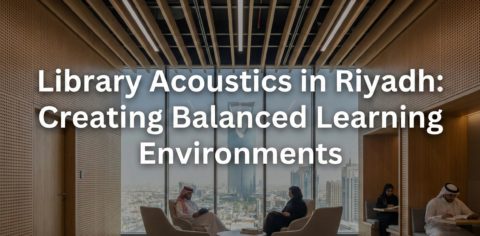
Libraries in Riyadh have seen major development over the past decade. Modern educational institutions and community libraries now function as active learning hubs. Students collaborate, researchers work intensively, and community members access digital resources.
This shift creates a key acoustic challenge. Libraries must support quiet study while also allowing collaborative activity within the same facility.
At Akinco KSA, we have worked on many library acoustic projects across Riyadh. Proper acoustic treatment transforms noisy, stressful environments into effective spaces for learning and research.
Understanding Library Acoustics in Riyadh’s Climate
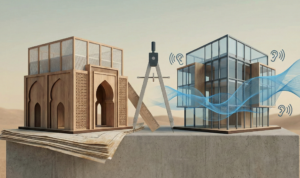
Riyadh’s dry climate and extreme temperature variations affect acoustic design. Traditional Saudi building materials such as marble, concrete, and glass create highly reflective surfaces. Sound travels easily across these spaces, and even quiet conversations become disruptive.
Material selection is also influenced by dust and heat. Not all acoustic solutions perform well in Riyadh’s environment. Materials must withstand temperature changes while maintaining long-term sound absorption.
Years of local experience have shown us that climate-appropriate solutions are essential for lasting acoustic performance.
Effects of Poor Acoustics in Libraries
Research consistently shows that acoustic comfort directly affects learning outcomes. In poorly designed libraries, background noise can reach 50 decibels, making concentration difficult and causing mental fatigue.
Students preparing for exams report productivity drops of nearly 40 percent due to noise distractions. Researchers who require extended focus struggle when footsteps, conversations, and echoing spaces interrupt concentration.
Library staff also suffer. Constantly asking patrons to lower their voices leads to vocal strain, especially in spaces where sound naturally amplifies.
These issues are not minor inconveniences. They directly undermine the educational purpose of libraries in Riyadh.
Strategic Acoustic Zoning for Modern Libraries
Effective acoustic treatment begins with proper space planning. Akinco KSA strongly supports acoustic zoning to manage different noise levels across a library.
Silent Study Zones
Silent zones require the highest level of acoustic control. These areas are typically used for individual study and research.
Key requirements include:
- Reverberation times below 0.6 seconds
- High-performance ceiling acoustic panels
- Wall-mounted absorption systems
- Flooring that reduces footfall noise
Collaborative Zones
Group discussion and project work areas are designed for speech clarity rather than silence. The goal is to contain sound and prevent noise spread to quiet zones.
Solutions include:
- Acoustic barriers
- Sound-masking systems
- Controlled placement of absorptive materials
Transition Areas
Corridors and buffer zones between silent and collaborative spaces are critical. Noise migration is reduced using:
- Acoustic vestibules
- Sound-dampening partitions
- Treated corridors
This approach allows different activities to coexist without conflict.
Acoustic Material Selection for Riyadh Libraries
Material selection focuses on durability and performance in Riyadh’s conditions.
- Fabric-covered fiberglass panels absorb sound across key frequencies
- Dust-resistant, tightly woven fabrics maintain their appearance
- Perforated wood acoustic panels add warmth and visual appeal
For ceilings, mineral fiber acoustic tiles with high CAC ratings are commonly recommended. These tiles reduce sound transmission between floors while absorbing noise within each space.
Large library halls with high ceilings require suspended acoustic baffles. These vertical elements prevent sound buildup and control excessive reverberation.
Controlling HVAC and Mechanical Noise
HVAC systems in Riyadh libraries operate continuously. Without proper design, they generate background noise that disrupts quiet environments.
Our strategies include:
- Correct duct sizing to reduce air velocity noise
- Acoustic duct lining
- Vibration isolation for mechanical equipment
These measures address noise at the source instead of masking the problem.
Acoustic Testing and Performance Verification
Professional acoustic treatment must be measured and verified.
We begin with baseline acoustic testing to record existing conditions. These measurements identify reverberation patterns and problem frequencies.
Post-installation testing confirms that acoustic goals have been met. This ensures real, measurable improvement rather than cosmetic changes.
Cultural Considerations in Saudi Libraries
Library design in Riyadh must respect cultural norms. Different spaces have different acoustic needs, including:
- Gender-segregated study areas
- Prayer rooms
- Family sections
Our experience across Saudi Arabia allows us to design solutions that meet cultural requirements without compromising acoustic performance.
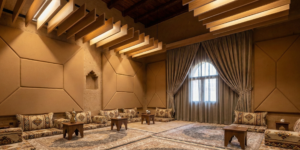
Aesthetics are also important. Acoustic treatments are designed to integrate seamlessly with traditional and contemporary Saudi architectural styles.
Acoustic Treatment as an Investment in Education
Proper library acoustics represent a long-term investment in education infrastructure. Benefits include:
- Improved academic performance
- Higher researcher productivity
- Better learning experiences
Libraries become true knowledge centres when sound supports, rather than disrupts, learning.
About Akinco KSA
Akinco KSA provides complete acoustic solutions for educational, commercial, and institutional buildings across Saudi Arabia. Our team combines international expertise with strong local knowledge in Riyadh and beyond.
Contact us to learn how professional acoustic treatment can transform your library into an ideal environment for study and research.