
Classrooms are among the most acoustically demanding spaces in any building. Rows of hard desks, tiled or vinyl floors, bare walls, and high ceilings combine to create long reverberation times that blur speech before it reaches the back row. Teachers raise their voices to compensate, students strain to follow along, and by the third period of the day everyone is more tired than they should be. Acoustic design in education is not a cosmetic upgrade, it is directly tied to how well students hear, understand, and retain what is being taught.
How Poor Acoustics Affect Learning Outcomes
Research into classroom acoustics consistently links excessive reverberation and background noise to lower speech intelligibility scores, particularly for younger students still developing language skills and for students learning in a second language. Students seated at the back or sides of a room, away from the direct line of the teacher’s voice, are especially affected. Teachers also carry a real cost, with vocal strain and fatigue reported at higher rates in classrooms with poor acoustic treatment compared to properly treated rooms.
Reverberation Time as a Design Target
Acoustic guidelines for education spaces typically target a reverberation time of around 0.6 to 0.8 seconds for a standard classroom, shorter for smaller rooms used with younger children, and slightly longer tolerances for larger lecture halls where amplification is used. An untreated classroom with hard surfaces throughout can easily reach reverberation times of 1.2 seconds or more, well beyond what supports clear speech.
Background Noise from Building Systems
Air conditioning units, projectors, and noise transferring from adjacent classrooms or corridors add a constant background layer that competes with the teacher’s voice. Even a well treated room for reverberation can still feel noisy if the underlying background sound level is too high, so acoustic design needs to address both reflected sound and intrusive background noise together.
Practical Acoustic Treatments for Classrooms
Ceiling Treatment
The ceiling is usually the largest untreated surface in a classroom and one of the most effective places to add absorption. Acoustic ceiling tiles or suspended baffles reduce reverberation significantly without taking up wall space needed for whiteboards, display boards, and storage.
Wall Panels in Strategic Locations
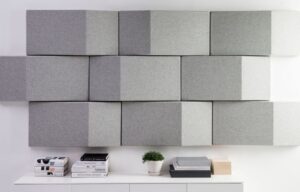
Full wall coverage is rarely necessary or practical in a classroom. Acoustic wall panels placed on the rear wall and side walls opposite windows, where early sound reflections are strongest, deliver most of the benefit without covering every surface or interfering with teaching displays at the front of the room.
Flooring and Furniture Considerations
Where hard flooring is required for durability and cleaning, rubber feet on chair and desk legs reduce scraping noise, and area rugs in reading corners or younger grade classrooms add localized absorption. Soft seating in group work areas also helps reduce the harshness of a room used for collaborative, louder activities.
Lecture Halls and University Spaces
Large lecture halls face a different challenge, since the distance between speaker and the furthest listener is much greater and amplification systems are usually involved. Acoustic treatment in these spaces focuses on controlling flutter echo between parallel hard walls, absorbing excess reverberation that would otherwise make amplified speech muddy, and ensuring sound reinforcement systems are paired with appropriate room treatment rather than simply turning up the volume to compensate for an untreated room.
Designing for Every Learning Environment With Akcoustic
Akcoustic works with schools, universities, and education developers to specify ceiling, wall, and flooring acoustic treatments suited to each type of learning space, from primary classrooms to university lecture halls and libraries. The goal in every project is a room where the effort of listening disappears, letting students focus on what is being taught rather than straining to hear it.
Frequently Asked Questions
What reverberation time should a standard classroom target
Most education acoustic guidelines recommend a reverberation time between 0.6 and 0.8 seconds for a typical classroom, with shorter times preferred for early years and special education settings where speech clarity is especially critical.
Do acoustic panels reduce noise coming from outside the classroom
Acoustic panels mainly reduce reverberation inside the room rather than blocking sound from entering. Reducing noise transfer from corridors or adjacent rooms requires attention to wall assemblies, door seals, and construction details separate from interior panel treatment.
Is acoustic treatment worth the investment in older school buildings
Yes, retrofitting ceiling and wall panels into existing classrooms is one of the more cost effective renovations a school can make, since the materials are lightweight, install quickly during school breaks, and produce a noticeable improvement in speech clarity almost immediately