
Acoustic Cellulose Spray in Riyadh: A Sustainable Alternative to Foam Spray for Sound Absorption

Acoustic Cellulose Spray in Riyadh

Riyadh’s building sector has grown rapidly over the past decade, and with that growth has come a sharper focus on interior comfort, including how a space sounds and not just how it looks. Foam based acoustic sprays have long been the default choice for treating ceilings and walls, but they come with drawbacks around durability, fire performance and environmental impact. Acoustic cellulose spray has emerged as a practical, more sustainable alternative that delivers strong sound absorption while addressing many of the concerns associated with traditional foam products.

What Acoustic Cellulose Spray Is Made From

Acoustic cellulose spray is produced primarily from recycled paper fibre, processed into a loose, textured material and applied wet using specialised spray equipment. Once it dries, it forms a continuous, matte finish that traps sound within its fibrous structure rather than allowing it to bounce back into the room. Because the raw material is recycled rather than manufactured from petrochemical foams, cellulose spray fits naturally into projects in Riyadh that are pursuing sustainability certifications or simply looking to reduce their environmental footprint.

Why It Outperforms Foam Spray in Key Areas

Foam based acoustic sprays can degrade over time, particularly in the heat and dust conditions common across the region, and many foam products are more flammable, which raises fire safety concerns in commercial buildings. Cellulose spray is treated with fire retardant additives during manufacturing, giving it stronger fire performance while maintaining comparable or better sound absorption. It also resists sagging and cracking better than foam over long periods, since its fibrous structure does not break down chemically the way some foam formulations do when exposed to heat and sunlight over years of use.

Many Riyadh contractors are now specifying cellulose spray alongside Monoglass Sonoglass spray systems to give a project two spray applied acoustic options depending on the ceiling type and budget.

Where Cellulose Spray Works Best in Riyadh

Open plan offices with exposed concrete ceilings benefit from cellulose spray because it reduces reverberation without requiring a suspended ceiling grid, which also helps preserve ceiling height in buildings where every centimetre counts. Restaurants, cafes and retail spaces use it to soften noise from conversation and foot traffic. Gyms, cinemas and multipurpose halls rely on it where a decorative panel finish is not required but noise control is still essential. Government and educational buildings across Riyadh have also started specifying cellulose spray in lecture halls and public areas as part of broader sustainability focused fit outs.

Installation Speed and Practicality

One of the strongest advantages of cellulose spray is how quickly it can be applied compared to installing rigid acoustic panels or suspended ceiling tiles. Since the material is sprayed directly onto the substrate, there is no need for framing, adhesive curing time or individual tile fitting, which shortens the finishing phase of a construction or fit out schedule considerably. This is particularly valuable for commercial projects in Riyadh working against tight handover deadlines set by developers or tenants.

Appearance and Design Flexibility

Cellulose spray leaves a continuous, seamless finish with no visible joints or grid lines, which suits the clean, minimalist aesthetic favoured in many modern Riyadh interiors. It can be tinted to match a chosen colour palette and applied at different thicknesses depending on how much sound absorption a room requires, giving designers control over both the finished look and the acoustic performance in a single application.

Durability in Riyadh’s Climate

Riyadh’s dry heat and dust levels place real demands on interior finishes, and cellulose spray is formulated to hold up well under these conditions. It resists mould growth, does not absorb moisture the way some fabric wrapped panels can, and its fire retardant treatment helps it meet the fire safety expectations common in Saudi commercial and public buildings. Should any section need repair, small areas can be resprayed and blended into the surrounding finish without redoing the entire ceiling.

As sustainability requirements become a bigger part of construction decisions across Riyadh, acoustic cellulose spray offers a way to meet sound absorption targets without relying on foam based products that carry heavier environmental and fire safety trade offs.

To find out if cellulose spray suits your ceiling or wall surfaces, speak with our acoustic specialists for a site assessment.
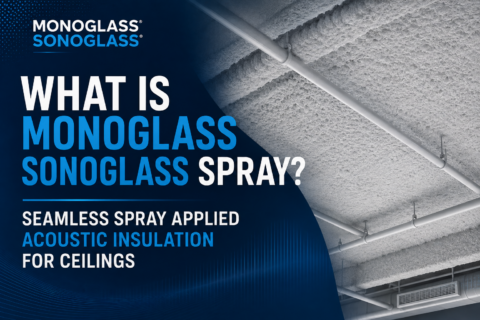
What Is Monoglass Sonoglass Spray? Seamless Spray Applied Acoustic Insulation for Ceilings

Monoglass Sonoglass Spray Explained

As buildings in Riyadh continue to prioritise interior comfort, spray applied acoustic products have become an important tool for architects and contractors looking for fast, effective sound absorption without visible panels or tiles. Monoglass Sonoglass spray is one of the leading products in this category, made from a glass fibre based material designed specifically for acoustic and thermal performance on ceilings and structural surfaces.

Understanding the Material

Monoglass Sonoglass spray is composed of fine glass wool fibres combined with a binding agent, applied wet directly onto a ceiling or wall substrate using pressurised spray equipment. As the material cures, it forms a continuous, slightly textured layer that absorbs sound energy within its fibrous mass rather than reflecting it back into the room. Unlike cellulose based sprays, Sonoglass uses inorganic glass fibre as its base material, which gives it particular strengths in thermal insulation alongside its acoustic performance.

How It Differs From Other Spray Applied Products

While cellulose spray relies on recycled paper fibre and is prized for its sustainability profile, Sonoglass spray is valued for its combination of acoustic absorption and thermal insulation in a single application. This dual performance makes it particularly useful in buildings where both noise control and temperature management are priorities, such as warehouses, industrial facilities and large span commercial buildings where a single ceiling treatment needs to do more than one job.

Projects that need both a decorative finish and hidden acoustic performance sometimes pair Sonoglass spray on structural ceilings with a stretch ceiling system installed below, combining the practical benefits of both products.

Where Sonoglass Spray Is Commonly Used

Industrial buildings and warehouses use Sonoglass spray on exposed roof decks and structural steel to control both noise reverberation and heat gain, which is especially relevant in Riyadh’s climate. Parking structures and large mechanical rooms benefit from its ability to cover irregular surfaces without requiring a separate ceiling grid. Sports facilities and event halls with high ceilings and hard surfaces also use Sonoglass spray to bring reverberation down to a manageable level across large volumes of space that would otherwise be difficult to treat with rigid panels alone.

Application Process

Sonoglass spray is applied using specialised equipment that mixes the glass fibre material with a binder immediately before it leaves the spray nozzle, allowing installers to build up the desired thickness in a controlled, even layer across large ceiling areas in a relatively short amount of time. The material adheres directly to concrete, metal decking and most structural substrates without requiring extensive surface preparation, which makes it a practical choice for retrofitting acoustic performance into existing buildings as well as new construction.

Performance Considerations

The acoustic performance of Sonoglass spray depends largely on the thickness of the applied layer, with thicker applications delivering higher sound absorption ratings at the cost of additional material and application time. Facility managers and designers should specify the required thickness based on the acoustic rating needed for a particular space, taking into account the size of the room, the type of noise being managed and any relevant building code requirements for the facility type.

Maintenance and Longevity

Once cured, Sonoglass spray forms a stable, durable surface that does not require regular maintenance under normal conditions. It resists moisture and does not support mould growth, which suits both the dry heat of Riyadh and the more humid conditions found in mechanically cooled interior spaces. Because the material is inorganic, it also holds up well against the high temperatures found near industrial equipment and exposed roof structures.

For projects across Riyadh that need a single product to manage both acoustic and thermal performance on large, exposed ceiling surfaces, Monoglass Sonoglass spray offers a proven, efficient solution.

To discuss whether Sonoglass spray fits your building’s requirements, contact our technical team for further guidance.

Stretch Ceilings in Riyadh: Membrane Ceiling Systems for Acoustic and Decorative Design

Curved Ceiling Luxury Interior

Ceiling design in Riyadh has evolved significantly, with developers and interior designers now looking for finishes that combine visual impact with practical performance. Stretch ceiling systems have become one of the most versatile options available, offering a smooth, contemporary membrane finish that can also be engineered to support acoustic performance, integrated lighting and quick installation across both commercial and residential projects.

How Stretch Ceiling Systems Work

A stretch ceiling consists of a flexible membrane, usually made from PVC or a coated fabric, fitted tightly onto a track installed around the perimeter of a room. The membrane is heated and stretched into place, creating a completely smooth, seamless surface below the structural ceiling. This gap between the membrane and the original ceiling can be left empty for a purely decorative effect, or used to house lighting, ductwork, sprinkler heads and, importantly, acoustic insulation.

Acoustic Performance Through Perforated Membranes

Standard stretch ceiling membranes are solid and reflect sound in the same way any hard, flat surface does. Perforated membranes solve this by allowing sound to pass through tiny holes in the material into an acoustic insulation layer fitted in the cavity above, where the sound energy is absorbed rather than bounced back into the room. This gives designers the ability to specify a stretch ceiling that looks identical to a standard decorative finish while quietly managing noise levels in spaces such as boardrooms, restaurants and open plan offices.

Some Riyadh projects combine a perforated stretch ceiling with Monoglass Sonoglass spray applied to the structural ceiling above, increasing total sound absorption before the membrane is even installed.

Design Options for Riyadh Interiors

Stretch ceilings support a wide range of finishes, including matte, satin and high gloss surfaces, along with printed designs that can incorporate patterns, branding or artwork. Backlit stretch ceilings, where LED lighting sits above a translucent membrane, have become especially popular in Riyadh hotels, retail stores and residential feature ceilings, producing a soft, even glow without any visible fittings. Curved sections, multi level layouts and cutouts for lighting or ventilation can all be incorporated into a single design, giving architects far more flexibility than traditional plaster ceilings allow.

Common Applications Across Riyadh

Hotels and restaurants use stretch ceilings to achieve a polished, contemporary appearance in dining and function areas while managing noise from guests and service activity. Offices install them in reception areas, boardrooms and open plan zones where a clean finish and reduced noise both matter. Residential projects across Riyadh increasingly feature stretch ceilings in living rooms, majlis areas and bedrooms, often paired with cove lighting for a refined finish. Retail outlets use printed membranes for branding purposes, turning the ceiling itself into a design feature.

Installation Timeframes

Stretch ceiling installation is typically faster and cleaner than traditional plaster ceiling work, since there is no wet trade involved. Most residential rooms and small commercial spaces can be completed in a single visit, while larger commercial areas may require multiple membrane sections joined together, a process an experienced installer can finish almost invisibly. Existing electrical fittings, sprinkler heads and air conditioning diffusers can generally be incorporated into the layout without difficulty when the design is planned ahead of installation.

Long Term Performance

Stretch ceiling membranes resist moisture and are simple to clean using a soft cloth and mild detergent, which suits Riyadh’s dry climate well. They do not develop cracks the way painted plaster ceilings can over time, and they are far less prone to staining from minor leaks, since moisture can often be managed without damaging the membrane itself.

For property owners across Riyadh looking for a ceiling solution that delivers both a striking appearance and genuine acoustic benefit, stretch ceiling systems offer a practical balance between design ambition and everyday performance.

To explore stretch ceiling designs for your space, get in touch with our design team today.

NEOM & The Line Acoustic Design: What Zero-Car Cities Mean for Noise Control in Saudi Arabia

NEOM & The Line Acoustic Design What Zero-Car Cities Mean for Noise Control in Saudi Arabia

NEOM is many things, depending on who you ask. A bold reimagining of urban life. An audacious bet on the future of infrastructure. A project that generates equal parts fascination and scepticism. What it has not been, until recently, is a subject for acoustic engineers.

That is starting to change. The Line, NEOM’s flagship linear city concept, presents noise control challenges that have very few precedents. An enclosed, car-free urban environment stretching 170 kilometres, housing up to nine million people, operating at multiple vertical levels, the acoustic implications of that design are profound, and they have not received anywhere near the attention that the architecture and infrastructure engineering have.

This is not a critique of the project. It is an observation that acoustic design at this scale, in this configuration, is genuinely novel territory. And for acoustic consultants, contractors, and developers working on Vision 2030 projects across Saudi Arabia, there are lessons here that apply well beyond NEOM itself.

The Specific Problem With Enclosed Urban Environments

In a conventional city, noise dissipates. Traffic noise radiates in all directions and loses energy with distance. Buildings scatter and absorb it. Wind disperses it. The outdoor acoustic environment is messy, but it is not contained.

In an enclosed urban structure like The Line, this does not happen. Sound generated at any point in the environment has nowhere to go except to bounce off the enclosing surfaces. Without deliberate acoustic treatment, the reverberation times inside a structure of this size and geometry would be extraordinary, the kind of acoustic environment that makes normal conversation difficult and crowd noise genuinely uncomfortable.

The engineering response to this is not mysterious: absorption, diffusion, and careful specification of surface materials throughout the build. What is unusual is the scale at which these decisions need to be made, and the degree to which acoustic performance needs to be integrated into the architectural brief rather than added as an afterthought.

Mechanical Systems Are the Bigger Issue

For a car-free city, The Line is going to be extremely loud underground. The high-speed rail system planned to run through the structure, connecting the ends of the 170 km city in around 20 minutes, generates significant noise and vibration. Underground rail noise is a well-understood engineering challenge, but the solutions (floating slab track systems, tunnel lining treatment, vibration isolation at the structure) need to be designed in from the beginning. Retrofitting vibration isolation to existing track is expensive and disruptive. Getting it right at the construction stage is comparatively straightforward.

The vertical transport systems, high-speed lifts, people movers, automated logistics, add to the mechanical noise load. In a conventional building, a noisy lift motor room is an occasional problem. In a structure where millions of people live in close proximity to continuous vertical transport, the cumulative noise from mechanical systems needs careful management across every level.

What NEOM Means for Acoustic Standards Across Saudi Arabia

Even if you are not working on NEOM itself, the project is changing expectations. Saudi Arabia’s construction market is watching the standards being set at the Kingdom’s most visible projects, and those standards propagate. Developers working on luxury residential towers in Riyadh, hospitality projects along the Red Sea, entertainment venues in Qiddiya, all of these are increasingly being asked to demonstrate acoustic performance rather than simply assuming it.

The Saudi Building Code has been progressively updated to include more explicit acoustic requirements, and the clients commissioning premium developments are becoming more sophisticated about what good acoustic design actually means. The NEOM project is partly responsible for this shift: when the world’s most ambitious construction programme puts noise control on the agenda, the rest of the market pays attention.

The Practical Takeaway for Vision 2030 Projects

For developers and contractors working on large-scale Vision 2030 projects, whether that is a giga-project like NEOM or a more conventional development in Riyadh or Jeddah, the message from projects like The Line is relatively consistent: acoustic design works best when it is integrated early.

A project at schematic design stage can accommodate acoustic requirements without significant cost impact. The same requirements applied at the construction documentation stage require compromises. Applied after construction, they require expensive retrofits. The decisions are roughly the same; the timing determines the cost.

Akcoustic works with developers, architects, and contractors across Saudi Arabia on both new-build and retrofit acoustic projects. If you are at an early stage on a Vision 2030 development and want to understand what acoustic compliance will require, getting that question answered now is considerably cheaper than getting it answered later.

Cinema Acoustic Design in Saudi Arabia: Sound Treatment for Riyadh’s Multiplex and Boutique Theaters

Cinematic design in Riyadh theater

When Saudi Arabia lifted the cinema ban in 2018, the development pipeline that followed moved fast. AMC opened its first Riyadh location within weeks of the announcement. VOX, Muvi, Cinepolis, and local operators followed. By the mid-2020s, the Kingdom had gone from zero commercial cinemas to over 350 screens, with more in development.

What moved slower was the acoustic expertise to support that growth. Cinema acoustics is a specialised field. The requirements are different from office acoustics, different from hospitality acoustics, different from almost everything else in the construction sector. And in a market that went from nothing to hundreds of screens in a few years, there was not much time for that expertise to develop organically.

The result is that some of Saudi Arabia’s cinemas sound excellent, and some do not. The difference is almost entirely acoustic design, specifically, whether acoustic requirements were built into the project from the start or treated as a fit-out detail.

What Cinema Acoustics Actually Requires

A cinema auditorium has two distinct acoustic objectives that pull in somewhat different directions. The first is isolation: preventing sound from leaking between auditoriums, from the lobby into the screening room, from mechanical plant rooms into the audience area. The second is absorption: controlling the internal acoustics of each auditorium so that the sound system can do its job.

On the isolation side, the standard reference is STC (Sound Transmission Class) or the international equivalent Rw. A well-designed cinema auditorium typically targets STC 65 or higher between adjacent screens. This is significantly higher than standard office partition requirements (STC 45–50) or hotel room separation (STC 55). Achieving STC 65 requires mass in the structure, decoupled wall assemblies, floating floor construction, and proper acoustic sealing at all penetrations.

Mass Loaded Vinyl (MLV) barriers play a useful role in cinema wall systems, they add significant acoustic mass without the structural implications of thick concrete or masonry, making them practical for the kind of lightweight partitions that cinema fitouts often use. But they need to be used correctly: any penetration, any gap around a conduit or pipe, any direct path through the structure, will compromise the STC rating of the whole assembly.

The Internal Acoustics Challenge

Once isolation is handled, the internal acoustics of each auditorium need attention. A cinema is not like a concert hall or a theatre, the sound system does almost all the acoustic work. The room itself needs to be as acoustically neutral as possible, meaning high absorption and low reverberation time.

Target reverberation times for cinema auditoria are typically 0.3–0.5 seconds, significantly lower than almost any other public space. Achieving this in a room with hard flooring (common in Saudi cinema designs where easy cleaning is a priority), hard ceiling structures, and relatively small volumes requires a lot of absorption area. Fabric-wrapped acoustic panels on walls and ceilings, acoustic ceiling tiles, and fabric seating upholstery all contribute.

The geometry of the auditorium also matters. Parallel side walls create flutter echo, a rapid repetitive reflection that makes sound reproduction muddy. Standard practice is to angle side walls slightly (typically 5–8 degrees from parallel) and to break up flat wall surfaces with panels of varying depth. In boutique cinema formats, where the architecture is often more expressive, these geometric considerations need to be worked through with the designer early.

HVAC: The Problem Nobody Talks About

The most common complaint in Saudi cinemas is not poor sound system quality, it is HVAC noise. Air conditioning is not optional in Saudi Arabia’s climate, and a cinema auditorium needs significant airflow to remain comfortable for a two-hour screening. The challenge is delivering that airflow quietly.

Standard HVAC design for commercial spaces targets around NC-35 (Noise Criterion 35). Cinema auditoria need NC-25 or better, in some premium formats, NC-20. Achieving this requires low-velocity air distribution, acoustic attenuators on supply and return ducts, vibration-isolated plant, and flexible duct connections at the auditorium boundary. None of this is difficult. All of it needs to be in the HVAC design brief from the start.

Boutique vs Multiplex: Different Problems

Large multiplex formats, eight to twelve screens in a single complex, have a structural advantage: the sheer mass of concrete between auditoriums provides a significant baseline of sound isolation. The acoustic design work is primarily about systematic sealing, HVAC control, and internal treatment.

Boutique cinema formats are harder. Smaller screen counts, more expressive architecture, lightweight construction in retail or hospitality settings, these create acoustic challenges that a standard multiplex specification does not address. Each boutique cinema project needs its own acoustic assessment, and the earlier that assessment happens in the design process, the better the outcome.

Akcoustic has worked on cinema and entertainment venue acoustic projects across Saudi Arabia. If you have a cinema development in planning and want to understand the acoustic requirements before the design is locked, the time to do that is now.

Villa Soundproofing in Riyadh: Your Complete Guide to Peaceful Living

villa soundproofing riyadh

Living in a luxury villa in Riyadh should mean peace and privacy. Yet many villa owners face unwanted noise that disrupts daily life. Traffic along King Fahd Road, nearby construction, and mechanical systems often affect comfort.

At Akinco KSA, we help homeowners create calm living spaces through professional villa soundproofing. This guide explains why soundproofing matters and how it can be done effectively in Riyadh.


Why Villa Soundproofing Matters in Riyadh

Riyadh’s rapid urban growth brings both opportunity and noise. Increased traffic, higher population density, and constant construction have made noise pollution a real concern for villa residents.

Modern Saudi villas often feature:

  • Open-plan layouts
  • Large glass windows
  • High ceilings

While these designs enhance light and space, they also allow sound to travel freely. Temperature extremes in Riyadh cause concrete and glass to expand and contract, creating gaps that allow noise to enter.

HVAC systems also run for long hours due to desert conditions. Without acoustic control, mechanical noise becomes a daily disturbance.


Common Noise Sources in Riyadh Villas

Understanding noise sources helps determine the right soundproofing solution.

External Noise

  • Traffic from King Fahd Road, King Abdullah Road, and King Khalid Road
  • Nearby construction projects
  • Neighborhood activity
  • Call to prayer, depending on villa location

Internal Noise

  • Home theaters and entertainment rooms
  • Kitchen appliances and water pumps
  • Air conditioning units
  • Multi-generational family activity

Structural Noise

Sound often travels through walls, floors, and ceilings rather than air. In two-story villas, footsteps, plumbing, and furniture movement commonly disturb lower floors.


Soundproofing Solutions for Riyadh Villas

Villa soundproofing must be customized for each home.

Wall Soundproofing

Walls are the primary defense against noise. We recommend multi-layer systems combining:

  • Absorption: Acoustic insulation inside wall cavities
  • Mass: Mass-loaded vinyl to block sound transmission
  • Decoupling: Structural separation to stop vibration transfer

For shared internal walls, double-stud construction offers excellent isolation. This works well between:

  • Bedrooms
  • Home offices and playrooms
  • Entertainment areas and living spaces

Ceiling and Floor Soundproofing

Multi-story villas need special floor-ceiling treatment.

Effective solutions include:

  • Acoustic underlayment under flooring to absorb impact noise
  • Floating floor systems to isolate vibration
  • Resilient ceiling channels to suspend ceilings and break sound paths

These treatments are essential when bedrooms sit below living rooms or entertainment spaces.

Window and Door Treatments

Windows are often the weakest point in villa soundproofing.

Recommended solutions:

  • Acoustic laminated glass with sound-dampening layers
  • Double glazing with optimized air gaps
  • Secondary glazing systems for added insulation

These solutions reduce noise while maintaining natural light and improving thermal comfort.

For doors:

  • Solid-core doors outperform hollow-core doors
  • Acoustic seals around frames and thresholds stop sound leakage

HVAC and Mechanical Noise Control

Air conditioning systems run continuously in Riyadh. Without treatment, they dominate indoor sound levels.

Our solutions include:

  • Acoustic duct lining to absorb airflow noise
  • Flexible duct connections to stop vibration transfer
  • Acoustic louvers for outdoor units to reduce compressor noise

Where possible, we recommend placing mechanical rooms away from bedrooms and living areas.

The Akinco KSA Soundproofing Approach

We begin with a detailed acoustic assessment of your villa. This includes:

  • Identifying noise sources
  • Measuring sound levels
  • Understanding your comfort goals

Based on this analysis, we design tailored solutions that suit your budget and interior style. Modern acoustic materials blend seamlessly with luxury finishes, including decorative panels and discreet window systems.

Our installation teams work efficiently and respectfully. Your home remains functional throughout the process.

Investing in Long-Term Comfort

Villa soundproofing is an investment in wellbeing and property value.

Benefits include:

  • Better sleep quality
  • Reduced stress
  • Improved focus for home offices

Costs depend on villa size, construction type, and desired noise reduction. Targeting key spaces such as master bedrooms can deliver significant improvements without treating the entire home.

Creating Your Quiet Sanctuary

Every family in Riyadh deserves a peaceful home. Professional soundproofing provides lasting comfort, whether you are building a new villa or renovating an existing one.

Akinco KSA delivers acoustic solutions designed specifically for Saudi Arabia’s climate and construction styles. Our experience with Riyadh villas ensures reliable, long-term results.

Book your villa acoustic assessment today and transform your home into the calm, quiet sanctuary your family deserves.

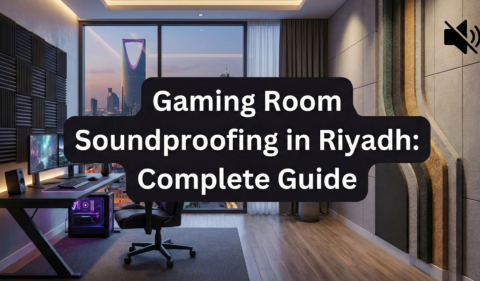
Gaming Room Soundproofing in Riyadh: Complete Guide for Gamers

Gaming Room Soundproofing in Riyadh

Riyadh has witnessed massive growth in the gaming industry over the last few years. As Saudi Vision 2030 places strong focus on entertainment and esports, more residents are investing in home gaming spaces.

At Akinco KSA, we have helped many gaming enthusiasts in Riyadh create acoustically optimized gaming rooms that preserve household harmony. This guide reflects our experience and explains why soundproofing matters and how to do it right.

The Importance of Gaming Room Soundproofing in Riyadh

Gaming generates high noise levels. Multiplayer matches, streaming sessions, and immersive single-player games can easily disturb family members and neighbors. This is especially relevant in Riyadh’s residential areas, where homes are close together or share walls.

Soundproofing serves two key purposes:

  • Prevents gaming noise from escaping the room
  • Blocks external sounds that interrupt focus

Together, these improvements significantly enhance the gaming experience.

For professional gamers and streamers, soundproofing is even more important. Microphones pick up background noise, reducing audio quality. Proper acoustic treatment ensures clean sound capture and supports a professional online presence.

Understanding Riyadh’s Unique Acoustic Challenges

Riyadh’s climate and construction methods create specific soundproofing challenges. Concrete walls and tiled surfaces reflect sound instead of absorbing it. This leads to echo and increased noise levels during gaming.

Extreme temperature changes also affect material performance. Soundproofing materials must withstand heat without degrading or releasing harmful substances. At Akinco KSA, we recommend only materials proven to perform reliably in Middle Eastern conditions.

Room sizes also vary widely. Villas often allow larger gaming rooms, while apartments require compact and efficient solutions. Each design is tailored to the available space and noise requirements.

Essential Soundproofing Elements for Gaming Rooms

Wall Treatment

Walls are the primary path for sound transmission. Acoustic panels reduce sound reflection inside the room, while mass-loaded vinyl barriers prevent noise from escaping.

A combined approach delivers the best results.

Standard acoustic foam provides basic absorption, but professional gaming setups require high-density panels capable of controlling low-frequency sounds such as explosions and bass-heavy soundtracks.


Ceiling Solutions

Sound travels upward easily, especially in multi-story homes. Ceiling acoustic panels help prevent gaming noise from disturbing upper floors.

Suspended acoustic ceiling systems add an air gap that improves sound isolation. Ceiling treatment is particularly important in apartments, where noise complaints from neighbors above are common.

Akinco KSA has resolved many such issues through proper ceiling soundproofing.

Door Upgrades

Standard doors allow significant sound leakage. Solid-core doors with acoustic sealing greatly improve isolation.

Additional measures include:

  • Door sweeps at the base
  • Weather stripping around frames

For maximum isolation, double-door entry systems create an airlock effect. While they require more space, they provide the highest level of sound control for professional gaming rooms.

Window Treatment

Windows are weak points in any soundproofing plan. Heavy acoustic curtains offer limited improvement, while secondary glazing or acoustic window inserts deliver better results.

These solutions also improve thermal insulation, which is beneficial in Riyadh’s hot climate.

Many gaming rooms do not require natural light. In such cases, fully sealing and treating windows provides maximum soundproofing and controlled lighting for gaming and streaming.

Floor Soundproofing Considerations

Floor treatment is especially important in apartments, where impact noise and vibration can disturb neighbors below.

Effective solutions include:

  • Acoustic underlayment beneath flooring or carpets
  • Thick padded area rugs for wheeled gaming chairs

Using acoustic underlayment with rugs enhances impact noise reduction and improves comfort.

Subwoofer isolation platforms prevent low-frequency vibrations from transmitting through the structure. These systems decouple speakers from floors using rubber or spring-based mechanisms.

Ventilation and Climate Control

Soundproofed rooms are sealed spaces and must be properly ventilated. Gaming equipment and occupants generate heat, making climate control essential.

Acoustic ventilation systems allow airflow without compromising sound isolation. Baffled ducts permit air movement while blocking sound transmission.

In Riyadh’s hot climate, combining acoustics with HVAC design is critical for year-round comfort.

Properly installed split AC units do not negatively affect soundproofing when isolation details are maintained. Cooling performance is also optimized to protect gaming equipment.

Professional Installation vs. DIY Solutions

Many gamers attempt DIY soundproofing using online tutorials and low-cost materials. While basic acoustic foam may improve room acoustics, true soundproofing requires professional assessment and installation.

At Akinco KSA, our experts:

  • Measure existing noise levels
  • Identify sound transmission paths
  • Design targeted solutions with measurable results

Incorrect installation, poor coverage, or mismatched materials can be costly and ineffective.

Investment and Long-Term Value

High-quality soundproofing is a long-term investment. Professionally treated gaming rooms add value to properties, especially as gaming culture continues to grow in Saudi Arabia.

Daily benefits include:

  • Reduced household noise conflicts
  • Freedom to game at any time
  • Improved audio quality and focus

These advantages often outweigh the initial cost.

Building Your Ideal Gaming Space

Gaming room soundproofing in Riyadh requires balancing acoustic performance, climate conditions, and budget.

At Akinco KSA, we have developed proven solutions for both casual gamers and professionals. Our experience across Riyadh’s residential properties allows us to recommend practical and effective soundproofing strategies.

Whether you are building a streaming studio or simply want to game without disturbing others, proper soundproofing can completely transform your gaming experience.

Contact Akinco KSA to schedule an acoustic assessment of your gaming space. Our team will provide honest recommendations based on your goals and budget, ensuring you invest wisely for soundproofing solutions that deliver lasting performance.

How effective is Mass Loaded Vinyl for Soundproofing?

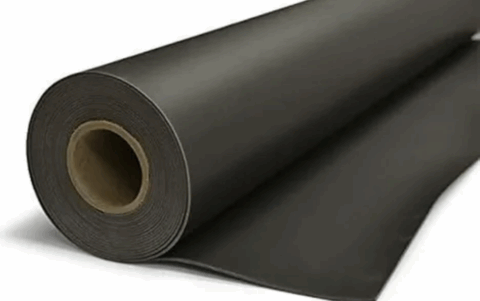
Acoustic Mass Loaded Vinyl Barrier

In the quest for superior soundproofing, various materials and methods are used to reduce noise levels in residential, commercial, and industrial spaces. Acoustic Mass Loaded Vinyl Barrier is one of the most influential and versatile materials available today. This dense, flexible material has gained popularity for blocking and absorbing sound across various frequencies. But just how effective is it for soundproofing? Let’s explore its properties, benefits, and applications.

Acoustic Mass Loaded Vinyl Barrier

What is Mass Loaded Vinyl?

Mass Loaded Vinyl (MLV) is a soundproofing material made from vinyl and dense fillers like barium sulfate or calcium carbonate. This composition gives MLV its significant mass, crucial for blocking sound transmission. Despite its weight, MLV remains flexible, making it easy to install in various applications.


How Does Mass Loaded Vinyl Work?

Sound travels through air and materials in the form of vibrations. A material must be dense enough to resist these vibrations to effectively block sound. The high mass of MLV disrupts the transmission of sound waves, preventing them from passing through walls, ceilings, floors, and other structures. By adding mass to a barrier, MLV significantly reduces the amount of noise that can penetrate it.


Benefits of Using Mass Loaded Vinyl for Soundproofing

High Soundproofing Efficiency

MLV is highly effective in reducing sound transmission. It works well against airborne noise like voices and music and impact noise like footsteps and vibrations. This makes it a versatile solution for different soundproofing needs, whether in homes, offices, or industrial environments.

Flexibility and Ease of Installation

Unlike rigid soundproofing materials, MLV is flexible and can be easily installed on walls, ceilings, floors, and even around pipes or ducts. It can be cut to fit specific dimensions and applied using adhesive, nails, or staples. This flexibility also allows it to conform to various surfaces, ensuring a tight fit that maximizes soundproofing efficiency.

Space-Saving Solution

Due to its thin profile, MLV can be added to existing structures without significantly increasing their thickness. This is especially useful in spaces where adding bulky soundproofing materials would be impractical or undesirable.

Durability and Long-Lasting Performance

MLV is not only practical but also durable. It resists moisture, mold, and mildew, ensuring long-term performance even in humid environments. Its robust nature makes it suitable for indoor and outdoor applications, providing consistent soundproofing benefits.

Versatility in Applications

From residential to industrial settings, MLV can be used in various applications. It is commonly installed in walls, ceilings, and floors, but also finds use in automotive soundproofing, HVAC systems, and even machinery enclosures. This versatility makes it a go-to material for comprehensive acoustic noise reduction solutions.


Applications of Mass Loaded Vinyl

  • Residential Spaces: Reducing noise from neighbors, traffic, or household activities.
  • Commercial Buildings: Improving privacy in offices, conference rooms, and studios.
  • Industrial Settings: Controlling noise from machinery and equipment.
  • Automotive Industry: Minimizing road and engine noise in vehicles.


Why Choose Akcoustic for Soundproofing Solutions?

At Akcoustic, we understand the importance of effective soundproofing in creating comfortable and productive environments. Our expertise as a trusted Soundproof Specialist ensures that we provide top-quality products and tailored solutions to meet your specific needs. Whether you’re dealing with noise from traffic, machinery, or everyday activities, we offer innovative solutions like Acoustic Mass Loaded Vinyl Barrier to help you achieve optimal sound control.

Acoustic Mass Loaded Vinyl Barrier

Conclusion

Mass Loaded Vinyl is a highly effective and versatile material for soundproofing, offering excellent noise reduction without compromising on space or aesthetics. Its ability to block a wide range of noise makes it a valuable addition to any soundproofing strategy. If you’re ready to enhance the acoustic comfort of your space, contact Akcoustic today to explore our comprehensive range of noise control and acoustic solutions designed to meet your needs.

Can Stretch Fabric Acoustic Panels Be Reused?

stretch fabric acoustic panels

In soundproofing and acoustic management, flexibility and sustainability are becoming increasingly important. One solution that has gained popularity for its effectiveness and adaptability is stretch fabric acoustic panels. These panels enhance the acoustic quality of spaces and offer potential for reuse, making them a cost-effective and environmentally friendly choice. But how feasible is it to reuse fabric acoustic panels? Let’s explore their design, functionality, and the possibilities for reusability.

stretch fabric acoustic panels

What Are Stretch Fabric Sound Absorbing Panels?

Stretch fabric soundproof panels are a versatile soundproofing solution designed to reduce noise levels and improve sound clarity within a space. They consist of a framework covered with a layer of acoustic material and finished with a stretch fabric. The fabric is tightly stretched over the frame, creating a sleek, smooth surface that enhances a room’s aesthetics and acoustics.

These panels are widely used in various settings, including offices, theaters, conference rooms, and homes. They effectively absorb sound waves, reducing echoes and reverberations to create a more comfortable acoustic environment.


The Reusability of Stretch Fabric Acoustic Panels

One of the critical benefits of stretch fabric sound absorbing panels is their potential for reuse. This feature makes them attractive for investing in sustainable and adaptable soundproofing solutions. Here’s why and how these panels can be reused:


Durability and Longevity

Stretch fabric soundproofing panels are built to last. The high-quality materials used in their construction ensure they can withstand regular wear and tear. The frames are typically made from durable materials such as aluminum or wood, while the fabric is resistant to fading and damage. This durability allows the panels to be reused in different settings without losing their effectiveness or aesthetic appeal.

Ease of Installation and Removal

The design of stretch fabric sound absorbing panels allows for easy installation and removal. The fabric can be carefully removed from the frame without causing damage, and the panels can be reinstalled in a new location. This flexibility benefits businesses or individuals needing to relocate or reconfigure their spaces.

Customization and Adaptability

Another advantage of these panels is their adaptability. The stretch fabric can be replaced or updated to match changing interior design preferences or branding needs. This means the same panel framework can be reused multiple times with different fabric coverings, making them a cost-effective solution for evolving spaces.

Sustainability and Eco-Friendliness

Reusing stretch fabric sound absorption panels contributes to sustainability by reducing waste. Instead of discarding old panels, they can be repurposed in new spaces or re-covered with fresh fabric. This approach aligns with environmentally conscious practices, helping minimise acoustic solutions’ environmental impact.


Why Choose Akcoustic for Stretch Fabric Acoustic Panels?

As a Soundproof Specialist, Akcoustic is dedicated to providing high-quality, sustainable noise control solutions. Our stretch fabric soundproofing panels are designed with durability and reusability in mind, ensuring you get long-term value from your investment. Whether you’re looking to improve the acoustics of a single room or an entire building, Akcoustic offers customizable solutions tailored to your specific needs.

stretch fabric acoustic panels

Conclusion

Stretch fabric acoustic panels are effective in enhancing acoustic comfort and offer significant potential for reuse. Their durability, ease of installation, and adaptability make them a sustainable choice for various environments. If you’re considering upgrading your space with acoustic solutions, contact Akcoustic today to explore our range of noise control products designed to meet your needs while supporting sustainable practices.

How Effective Are Acoustic Louvers in Noise Reduction?

acoustic louvers noise reduction

In modern architecture and industrial settings, managing noise is a significant challenge. In commercial buildings, factories, or residential complexes, noise pollution can negatively impact comfort, productivity, and well-being. One of the innovative solutions to address this issue is the use of acoustic louvers noise reduction. These specially designed structures effectively reduce noise while allowing air circulation, making them an essential component in noise control strategies.

acoustic louvers noise reduction

What Are Acoustic Louvers?

Acoustic louvers are designed to control noise by reducing sound transmission while maintaining proper airflow. They are typically installed in areas where ventilation is needed, but noise levels must be controlled, such as HVAC systems, industrial plants, and commercial buildings. The design of these louvers includes sound-absorbing materials that capture and dissipate noise, preventing it from spreading to adjacent areas.


How Do Acoustic Louvers Work?

The effectiveness of acoustic louvers lies in their unique construction. They consist of blades or slats angled to allow airflow while minimizing noise transmission. The slats are lined with sound-absorbing materials, such as mineral wool or acoustic foam, which absorb sound waves as they pass through the louver. This reduces the noise that escapes into the surrounding environment.


Advantages of Using Acoustic Louvers

Effective Noise Reduction

Acoustic louvers are highly effective in controlling noise. They are designed to reduce sound levels from various sources, such as mechanical equipment, HVAC systems, and industrial machinery. By absorbing and dissipating sound, these louvers help create a quieter and more comfortable environment for occupants.

Maintains Airflow

Unlike traditional noise barriers, acoustic louvers do not block airflow. They are specifically designed to allow ventilation while controlling noise. This makes them ideal for applications where both noise reduction and ventilation are necessary, such as in cooling systems or air intakes.

Durability and Low Maintenance

Acoustic louvers are made from durable materials that can withstand harsh environmental conditions. They require minimal maintenance, making them a cost-effective solution for long-term noise control. Their robust design ensures they remain effective even in demanding industrial settings.

Versatile Applications

Acoustic louvers can be used in a wide range of applications. They are commonly found in commercial buildings, industrial facilities, power plants, and residential complexes. Their versatility makes them popular for architects and engineers looking to integrate noise control solutions without compromising functionality or design.

Enhances Acoustic Comfort

Acoustic louvers contribute to a more comfortable acoustic environment by reducing noise levels. This is particularly important in spaces where people work or live, as excessive noise can lead to stress, decreased productivity, and lower overall satisfaction. Acoustic louvers help mitigate these issues, promoting a better quality of life and work environment.


Why Choose Akcoustic for Acoustic Louvers?

As one of the leading soundproofing companies, Akcoustic specializes in providing top-notch noise control solutions. With years of experience and a commitment to quality, Akcoustic offers a range of acoustic louvers tailored to meet the specific needs of various projects. Whether you need to control noise in an industrial setting or improve acoustic comfort in a commercial building, Akcoustic has the expertise and products to deliver effective results.

acoustic louvers noise reduction

Conclusion

Acoustic louvers are essential for noise reduction in environments where airflow is critical. Their ability to control noise while allowing ventilation makes them a preferred choice for many applications. If you want to enhance your space’s acoustic comfort, consider the benefits of acoustic louvers noise reduction. Contact Akcoustic today to explore our comprehensive range of noise control and acoustic solutions tailored to your needs.